

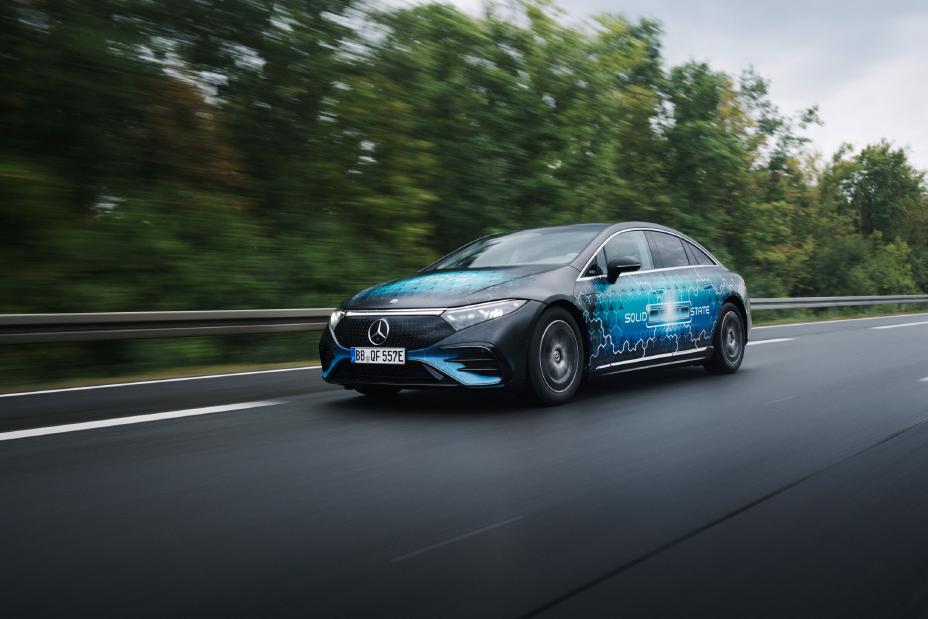
The Technology Behind It
- The battery is a lithium-metal solid-state pack built in collaboration with Factorial Energy. The tech is referred to as FEST (Factorial Electrolyte System Technology).
- While compared to the standard liquid-electrolyte battery of the EQS, this prototype solid-state pack delivers about 25% more usable energy in the same size & weight envelope.
- To deal with volume changes in cells during charge/discharge, the pack uses pneumatic actuators that dynamically manage internal pressure to preserve performance and durability.
Implications & What It Means
- This demonstration shows that solid-state battery technology is getting closer to being not just laboratory curiosities, but viable in “real world” long-distance driving.
- With a remaining buffer of range after such a long drive, it suggests that future EVs equipped with similar tech could offer ranges exceeding today’s longest EVs, reducing or eliminating “range anxiety” for many users.
- Mercedes says it aims to bring solid-state batteries into series production by the end of the decade.
Caveats / What to Watch
- The vehicle was lightly modified; it’s not yet a production model. Some optimizations or special engineering was likely part of enabling this distance.
- Conditions (speed, weather, load, route) affect how this would translate to everyday use. Real traffic, heavier loads, climate extremes could reduce range.
- Cost, manufacturability, battery durability, safety in mass production, and charging infrastructure remain open questions. Solid-state tech tends to be more challenging to scale and cost more initially.
