

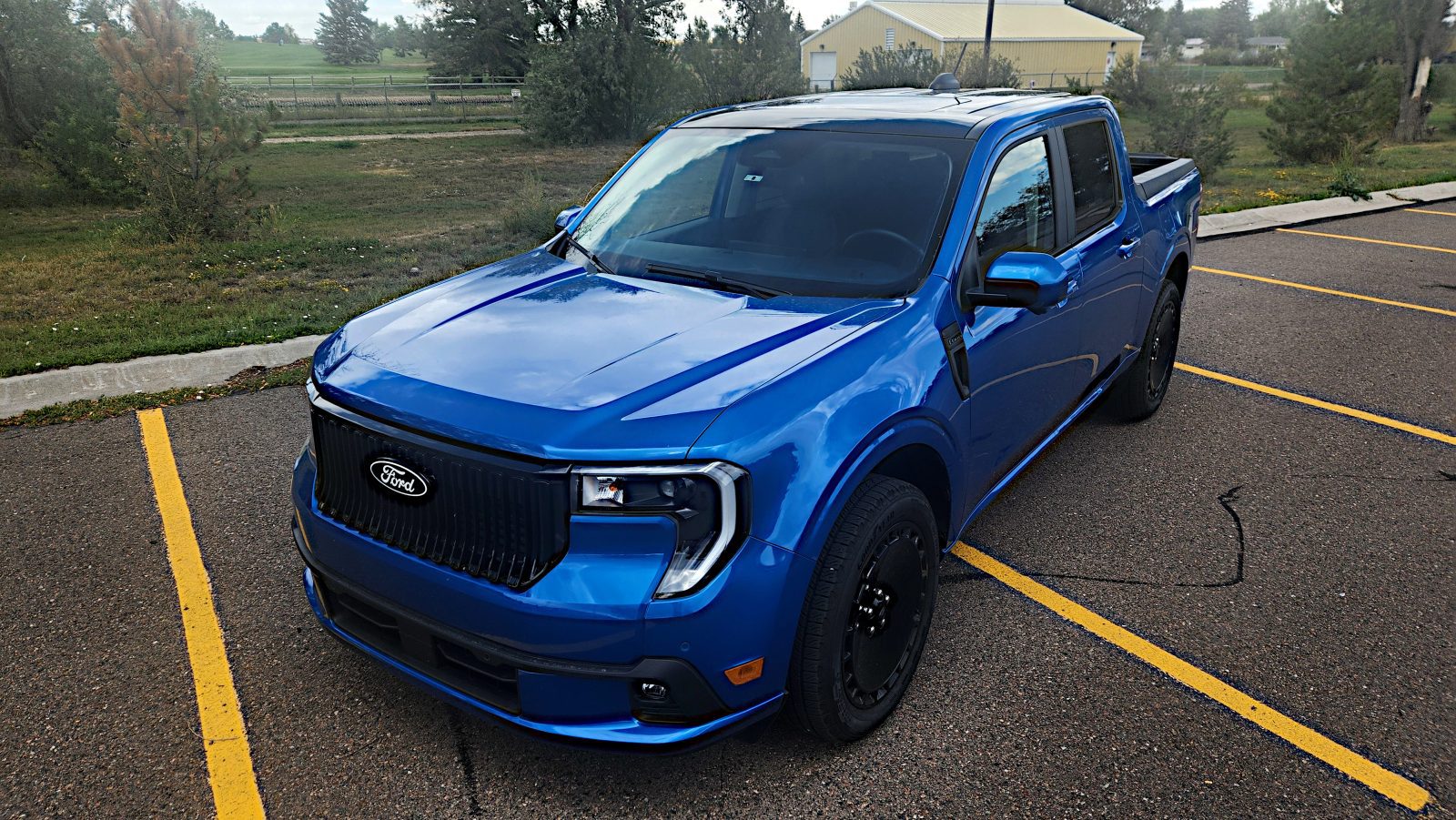
Ford’s 2025 Maverick already had a strong claim to serve the niche of a compact, efficient pickup that doesn’t feel like compromise. But with the arrival of the Lobo trim, Ford seems to be aiming to inject a bit more street-truck swagger into the mix. It’s no revolutionary shift, the Maverick remains what it was, but the Lobo gives it a sharper edge.
To start with, the Lobo builds on the 2025 Maverick’s broader updates (new front fascia and styling cues, improved infotainment, available AWD on the hybrid, etc.). What sets it apart are the modifications intended to tune the driving experience: lowered suspension, upgraded brakes, sportier styling cues, torque vectoring in AWD, and a reprogrammed 7-speed (derived from 8-speed) “quick shift” box in Lobo mode.
Thus, I’d call Lobo the Maverick’s “intentional exaggeration”: a little more show, a bit more grit, without fundamentally rewriting what this truck is.
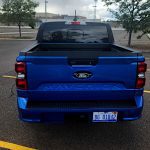
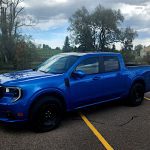
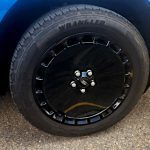
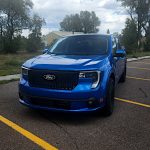
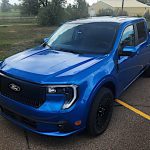
One of the strengths of the Maverick line is its modest proportions. It doesn’t try to pretend to be a full-size pickup. The Lobo trim does add some visual bravura, though without undermining that compact ethos. The blacked-out trim, rally-style 19-inch “turbofan” wheels, sharper roofline and grille tweaks lend a more aggressive silhouette. My only quibble is that, visually, the Lobo hints at a performance halo it doesn’t fully deliver. The lowered ride height gives it a planted stance, but on uneven terrain the body still flexes in ways typical of unibody pickups.
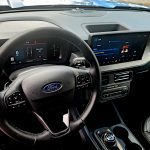
In the Maverick refresh, Ford upgraded to a 13.2-inch infotainment display, added wireless Apple CarPlay / Android Auto, and packed in more driver assistance (360° camera, trailer-assist features, etc.). For Lobo, there are subtle hints of differentiation like unique seat badging, trim accents, and perhaps a slightly more aggressive ambiance.
In day-to-day use, the interface remains serviceable, though not dazzling. Ford’s Sync UI has matured, but occasional menu hierarchy or latency quirks still show. That said, for a truck of this size, the ergonomics are commendable: sightlines are good, controls are familiar, and the cabin feels more functional than cheap.
One thing I’d flag: when you push a truck into a more performance-oriented trim, the balance between sporty cues and daily usability becomes delicate. The Lobo finds itself somewhere in that balance, though I found myself wishing for a few more creature comforts (e.g. more aggressive bolstering, more premium materials) to match the exterior’s promise. And maybe some actual performance.
When looking at the point of the Lobo, on paper, one might assume that performance is where the Maverick Lobo is meant to shine. The 2.0L EcoBoost turbo I-4 (unchanged in peak numbers) serves as the powerplant. What changes is how it’s managed: the Lobo’s version of AWD includes torque vectoring, and the reprogrammed 7-speed quick shift tactic (skipping second under certain regimes) is intended to sharpen response. TLDR: it doesn’t.
On tarmac, especially twisty roads, the Lobo feels quicker off the line and more confident under cornering load than the standard Maverick. But that’s a pretty low bar. But it is not a sports car. Body roll, weight transfer, and suspension compliance still remind you this is a truck. And those fast sprints? They only feel fast. Don’t expect sub-9s 0-60s on public streets.
Ride-wise, the hardened suspension is detectable. It’s definitely firmer than base Mavericks, and on rough surfaces you feel more of the road. But unless roads are extraordinarily broken, the tradeoff seems acceptable for the added character buyers of the Lobo would be after.
And don’t even think about off-roading anything more than curated dirt with the 2025 Ford Maverick Lobo. It’s definitely not going to do well.
One of Maverick’s core strengths is efficiency, especially in hybrid form. With 2025’s updates, AWD is now available for the hybrid and the hybrid drivetrain can tow up to 4,000 lbs (with the proper towing package). Lobo, however, uses the turbo EcoBoost variant, so it loses the hybrid advantage. Lobo’s fuel economy lands noticeably below hybrid AWD versions. That compromise is consistent with the “more muscle, more style” tradeoff, but since there isn’t much muscle being added..
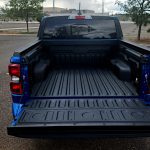
In terms of bed utility, cargo area, and general usability, nothing about Lobo fundamentally changes what the Maverick already does well. You still get a compact footprint, useful bed, practical tie-downs, and enough room for everyday hauling. The tradeoffs are more in the dynamic domain than the utility domain.
The standard Maverick remains one of the more compelling value propositions in small pickups. Lobo, in contrast, is less about utility optimization and more about injecting personality and an emotional backbone. That means buyers will have to decide: is the extra cost for the Lobo’s upgrades justified by the extra feel and look?
The 2025 Maverick Lobo doesn’t rewrite the playbook. It offers a more spirited footnote in the Maverick saga. If you like the original Maverick’s practicality but have always wished it had a bit more attitude, the Lobo is a compelling proposition. It won’t make you forget proper performance trucks, but for what it is, Lobo punches above its weight.
If Ford had wanted to show that even efficient trucks can be fun without overreach, this feels like their most successful attempt yet.
Review originally published on DriveModeShow.com.
