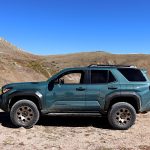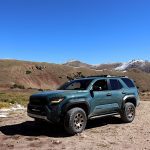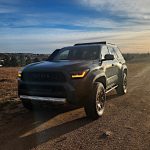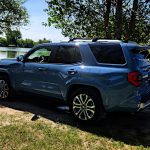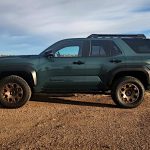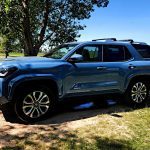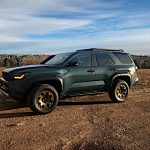

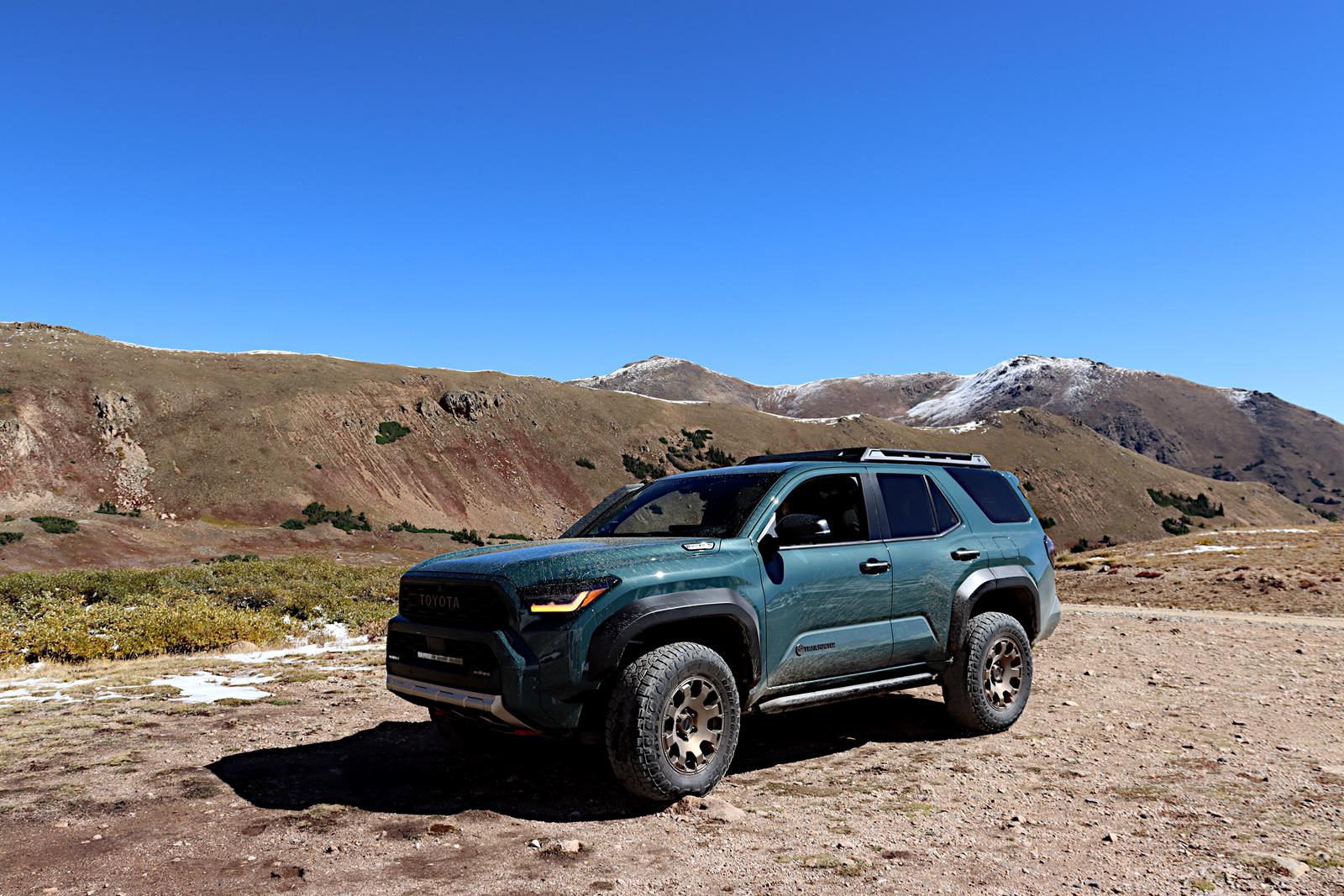
After more than a decade of essentially the same architecture, the 4Runner finally steps into its sixth generation for 2025. It retains the body-on-frame chassis, but adopts the newer TNGA-F platform used in the latest pickups from Toyota, which brings with it improved rigidity and suspension geometry. Under the hood is a new(ish) 2.4-litre turbocharged four-cylinder (278 hp / 317 lb-ft) that replaces the previous-gen‘s V6. And there’s now an available hybrid variant (called “i-ForceMax”) rated at 326 hp and a hefty 465 lb-ft of torque. On paper this looks like a meaningful evolution; one that seeks to modernize without throwing out the 4Runner DNA.
In the real world, the 4Runner is more than just evolved modernization, though. Toyota managed to throw out most of the 4Runner’s previous couple of generations’ DNA and start fresh, but without it feeling like that’s what happened.
The biggest upside to all of this is with efficiency and power delivery gains. The shift from the old 4.0-litre V6 and five-speed automatic in the previous generation to the modern turbo-four plus eight-speed auto is a big step forward. More like a standing long jump forward, really. In particular, the hybrid’s torque figure is impressive and it gives a lot of it from the get-go without waiting for a ramp-up or turbo kick. Combine that with the updated chassis and you have the makings of a 4Runner that can handle both on- and off-road duties more gracefully. Especially in those off-road-specific variants like the Trailhunter and TRD models.
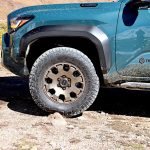
For those who bought a 4Runner because it isn’t just another soft crossover, the 2025 model maintains the body-on-frame layout, solid axle (in some trims), and the off-road‐centric trims (TRD Off-Road, TRD Pro, Trailhunter) with things like high-mount air intake, big tires, 4WD systems. In that sense, Toyota hasn’t compromised the “go anywhere, do anything” ethos. It’s just a little more efficient about getting there.
In previous generations, the 4Runner lagged in interior finesse and infotainment. In 2025, however, there’s a standard 8-inch screen, an optional 14-inch display, a 12.3-inch digital gauge cluster, wireless Apple CarPlay/Android Auto, and other nice touches. These updates matter because they bring the cabin closer to the expectations for a $40-70 k SUV. The downside, though, is that these are still Toyota-based systems. So expect lag between inputs and a whole lot of nagging nanny systems to be included.
There are some other downsides to a body-on-frame design. All things that still make me wonder why middle-aged Gen-Xers who do nothing but act as a taxi service still think these are the thing to have. The 4Runner makes no sense if you don’t go off-road (not off-pavement, but actual off-road). Yet somehow, the 4Runner Limited model still exists and sells like hotcakes to these glorified Uber drivers. It’s not comfortable to drive compared to, say, its chief rival: its Highlander sibling. Nor is it as fuel efficient or as easy to get in and out of, or as good with cargo or passengers.
Don’t get me going on the third row in this thing. It’s next to useless.
At any rate, most of the 4Runner’s models are now off-road-ready in various levels of competency. The TRD Pro and Trailhunter models top that list, of course, but they aren’t alone.
The 2025 Toyota 4Runner is a credible evolution, not a total reinvention. It delivers significantly improved powertrains, modern technology, and retains the rugged identity the model is known for. For buyers who value body-on-frame durability, off-road readiness, and want a vehicle that stands out against the tide of soft SUVs, this is a compelling choice.
But (and it’s a meaningful but) this isn’t the best midsize SUV for every use case. If your day-to-day priorities are maximum comfort, rear-seat space, and refinement for daily commuting, then there are rivals that edge it out. And they’re on the same sales lot. The 4Runner asks you to accept some compromise in exchange for its rugged virtues.
In short: it does what a modern 4Runner should do, and it does it well. If you buy one, you’re buying a bit of legacy plus serious capability. But make sure you’re comfortable with its trade-offs before you sign the check.