

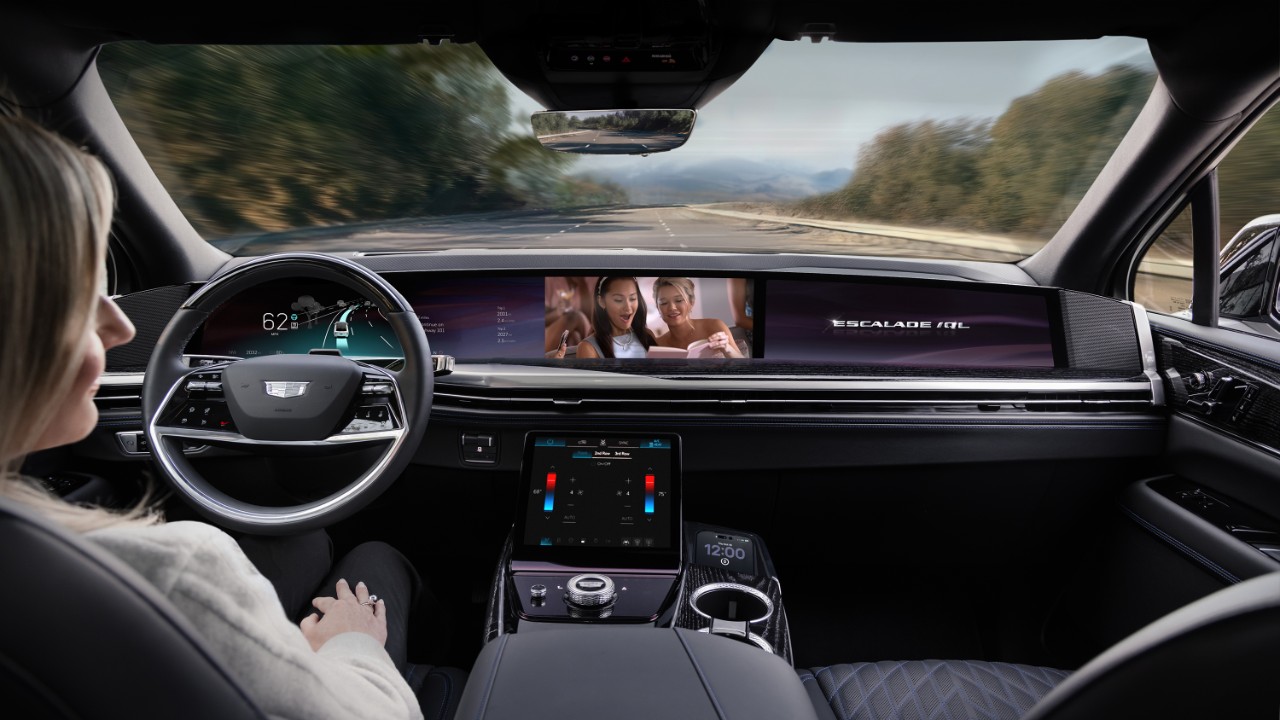
At its “GM Forward” media event in New York, General Motors (GM) laid out a vision for the future of mobility: one in which cars are not just transport machines but intelligent assistants.
CEO Mary Barra and other senior leaders showcased major advancements across autonomy, artificial intelligence, software and manufacturing that are aimed at transforming how vehicles are used, updated and experienced.
What’s New & Noteworthy
- Eyes-Off Driving (2028 target):
GM is aiming to deliver “eyes-off” driving — meaning drivers don’t have to continuously monitor the road — beginning in 2028, first on the Cadillac Escalade IQ electric SUV.
They note they’ve already mapped 600,000 miles of hands-free roads in North America and vehicles using the company’s Super Cruise hands-free driving system have driven 700 million miles without a crash attributed to the system. - Conversational AI (Starting next year):
Beginning in 2026, GM vehicles will integrate conversational AI (via Google Gemini) so you can talk to your car as naturally as a fellow passenger.
Down the line, they’ll introduce their own AI tailored to your vehicle and preferences, with OnStar connectivity helping personalize the experience. - Unified High-Performance Computing Platform (2028):
Starting in 2028 (again, beginning with the Escalade IQ), GM plans to debut a centralized computing architecture that covers everything: propulsion, steering, infotainment, safety systems. - Key improvements:
10× more over-the-air software update capacity, 1,000× more data bandwidth, up to 35× more AI performance compared to today’s vehicles. - Advanced Robotics & Manufacturing Evolution:
GM shared progress from its Autonomous Robotics Center (ARC) in Michigan and a lab in Mountain View, California, where teams of roboticists, AI engineers and hardware specialists are building smarter robots and “cobots” to improve manufacturing efficiency, safety and quality. - Energy & Vehicle-to-Grid Capabilities:
Today, many GM EVs can already power homes as backup systems. Beginning in 2026, the full GM Energy home system (bidirectional charging + a stationary home battery) will be offered via lease, enabling EVs to feed power back to the grid.
What This Changes
For car-buyers, tech enthusiasts and the EV/mobility market, this announcement signals several key shifts:
- Vehicles are becoming software-defined and updatable long after purchase. With massive bandwidth and compute behind the scenes, GM is betting on the car evolving, not aging.
- The move toward autonomous/eyes-off driving is a big next step. While many vehicles today offer driver-assist, going fully (or largely) hands/eyes-off is a different level— GM is aiming for that in 2028.
- The integration of conversational AI shifts the role of the vehicle from tool to assistant. Imagine your car proactively understanding your preferences, maintenance needs, trip planning, even entertainment.
- The manufacturing and energy elements demonstrate GM isn’t just thinking about vehicles, but about the ecosystem: robotics in plants, power systems in homes, the grid as part of the vehicle story.
Things to Watch
- Real-world rollout: While 2026 and 2028 are the dates announced, the pace of adoption and actual availability can vary.
- Regulatory & safety considerations: Eyes-off driving and autonomous features depend not just on technology but on regulations, public acceptance and infrastructure.
- Hardware & upgrade cycle: Central computing platforms hint at future-proofing, but how the cars you buy today vs tomorrow will compare is worth watching.
- Cost & value: Advanced features and systems often come at a premium. How GM prices these and offers them across different segments will matter.
- Integration with environment: GM’s home energy and vehicle-to-grid ambitions are exciting, but will depend on local utilities, grid support and consumer adoption.
GM’s announcement marks a bold leap toward making vehicles smarter, more connected and more autonomous. By aligning AI, unified computing, robotics and energy systems, GM is positioning itself for a future where the car isn’t just transportation, it’s a versatile platform for mobility, intelligence and home-energy integration.
