
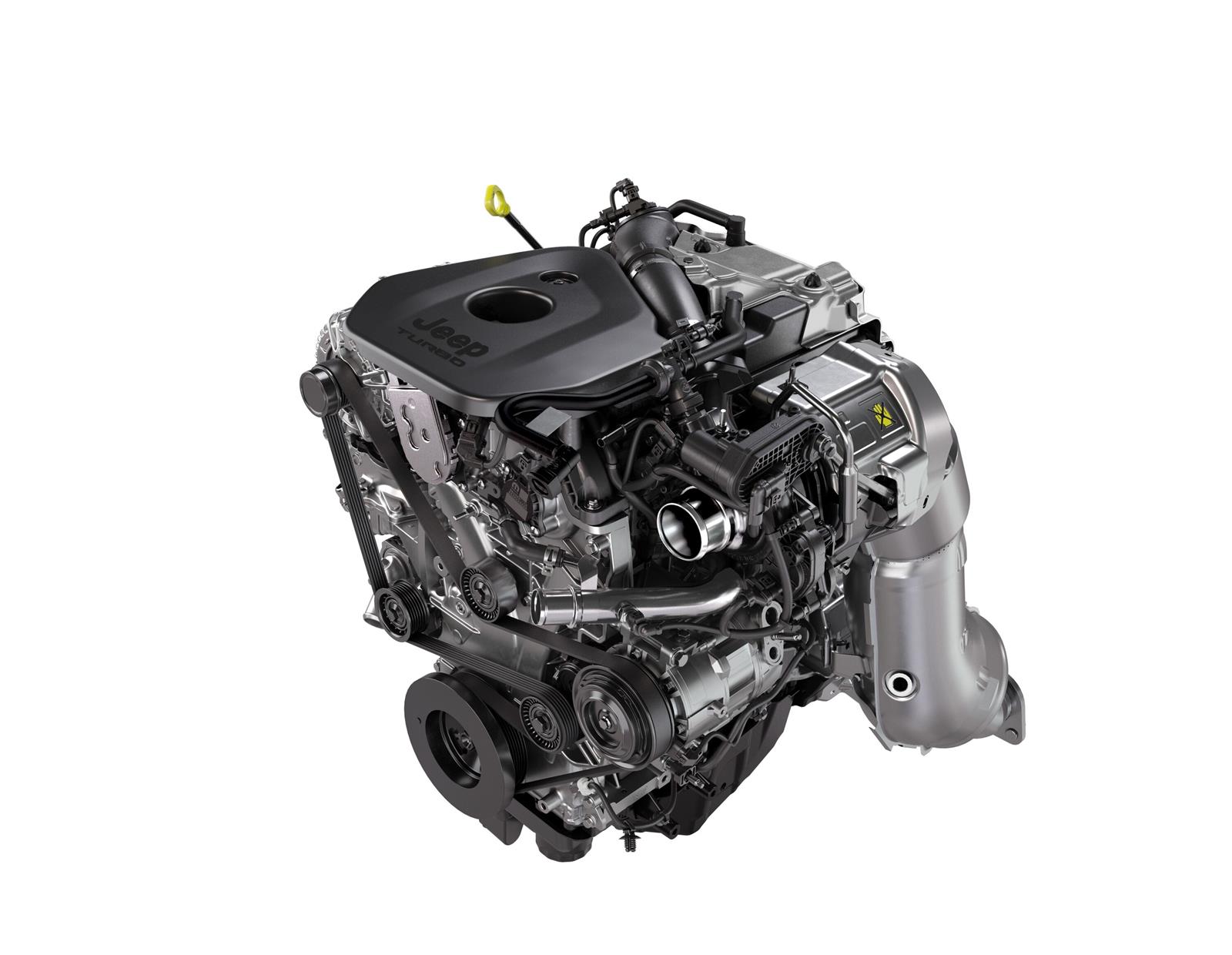
Stellantis has introduced the all‐new 2.0-litre “Hurricane 4 Turbo” four-cylinder engine, signalling a major powertrain shift for the company’s U.S. operations.
Performance Highlights
- The engine produces 324 horsepower at 6,000 rpm and 332 lb‐ft of torque in the 3,000-4,500 rpm range.
- That translates to a power density of roughly 162 hp per litre, putting it ahead of many competitive turbocharged fours.
- Key technologies include a variable-geometry turbocharger for better low-rpm response and a “turbulent jet ignition” (TJI) system — a pre-chamber ignition design that enhances combustion efficiency and help reduce fuel consumption.
Efficiency & Engineering
According to Stellantis’ data:
- The new Hurricane 4 claims to use about 10% less fuel while delivering about 20% more power compared with the previous 2.0-litre turbo engine it replaces.
- The engine also uses a higher compression ratio (12.0:1) and runs on the Miller cycle to boost efficiency.
- Production for the engine will include Stellantis’ plant in Dundee, Michigan among others.
For Stellantis and its brands (such as Jeep) this engine represents a strategic move. It replaces older naturally aspirated V6s and previous turbo fours, allowing more power, better efficiency, and a more modern powertrain architecture. It aligns with broader trends in automotive engineering: fewer cylinders, more boost, smarter ignition/combustion systems, and lighter/more efficient designs.
The shift may also help Stellantis hit future regulatory targets for emissions and fuel economy, while preserving performance expectations for its customers.
What to Watch
- Real-world fuel economy and reliability: high output and advanced combustion systems (like TJI) often raise questions about durability, cost of maintenance, and actual mpg in everyday driving.
- Vehicle platforms & models: The press release indicates the engine will debut in the 2026 model year for certain vehicles, and may roll out broadly across many of the company’s U.S. brands.
- How this engine plays into Stellantis’ overall transition strategy: While electrification remains a key focus across the industry, updates to internal‐combustion engines (ICE) like this one show that ICE will continue to play an important role for some years.
- Customer and aftermarket reception: As the engine enters real-world use, engine noise/harshness, maintenance costs, and real vs claimed performance will matter.
Stellantis’ new 2.0-litre Hurricane 4 Turbo engine is a significant technological leap: packing 324 hp and 332 lb-ft of torque from a 2.0-litre four-cylinder, while promising better fuel economy and modern combustion tech. It underscores the automaker’s commitment to high‐performance, efficient ICE powertrains even as the broader industry shifts toward electrification. For buyers of future Stellantis/Jeep/Ram vehicles, this means more power with less compromise—and for the company, it means stronger competitiveness in the evolving market.