

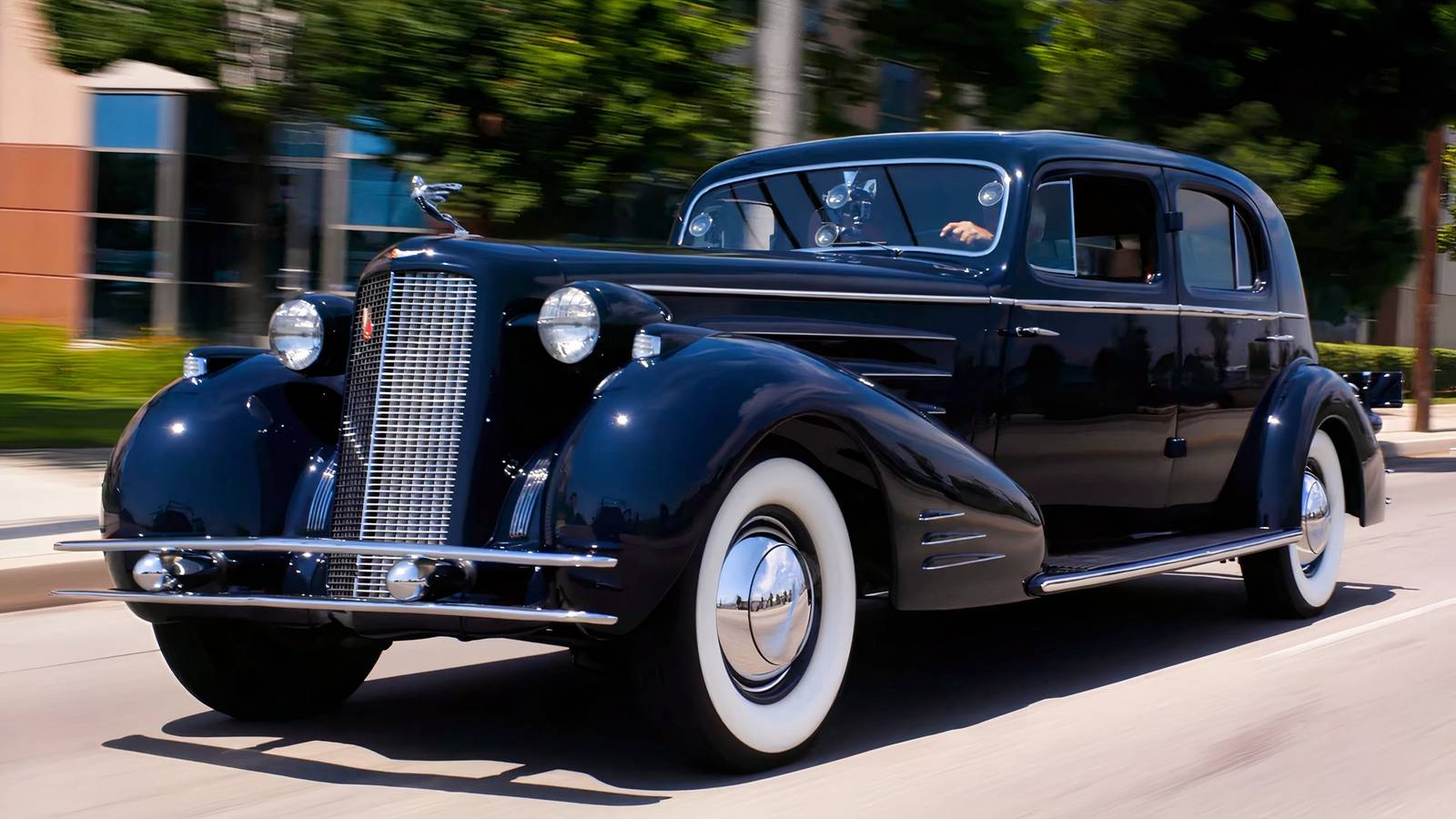
Jay Leno is joined by owner Steve Nannini to drive a true piece of automotive royalty: a magnificent 1934 Cadillac V-16 Club Sedan. This massive car, stretching over 20 feet long, represents the peak of American pre-war luxury and engineering.
The Cadillac V-16 caused an earthquake when it debuted, challenging the most elite brands like Duesenberg and Rolls-Royce. In fact, a legendary story surrounds this engine: Rolls-Royce actually reverse-engineered the V-16 to inform the design of their own V12 Phantom III engine after W.O. Bentley (founder of Bentley Motors) test-drove it and declared it “one of the best cars” he had ever driven.
Engineered for Royalty: The V-16: Cadillac’s goal was silence and refinement, not raw speed. Its torque is phenomenal, allowing it to glide from 5 MPH up to over 100 MPH in top gear. Art Deco Design: The engine bay itself is a piece of sculpture. Harley Earl and the Art & Color department styled the engine with a hidden central valley cover and porcelain-coated exhaust manifolds that reduced heat and noise. Innovation: This 1934 model includes innovations like hydraulic lifters, knee-action independent suspension, and a new air intake system that bumped horsepower from 180 to 200. Rarity: Only 206 V-16s were built, with only 53 surviving today.
