

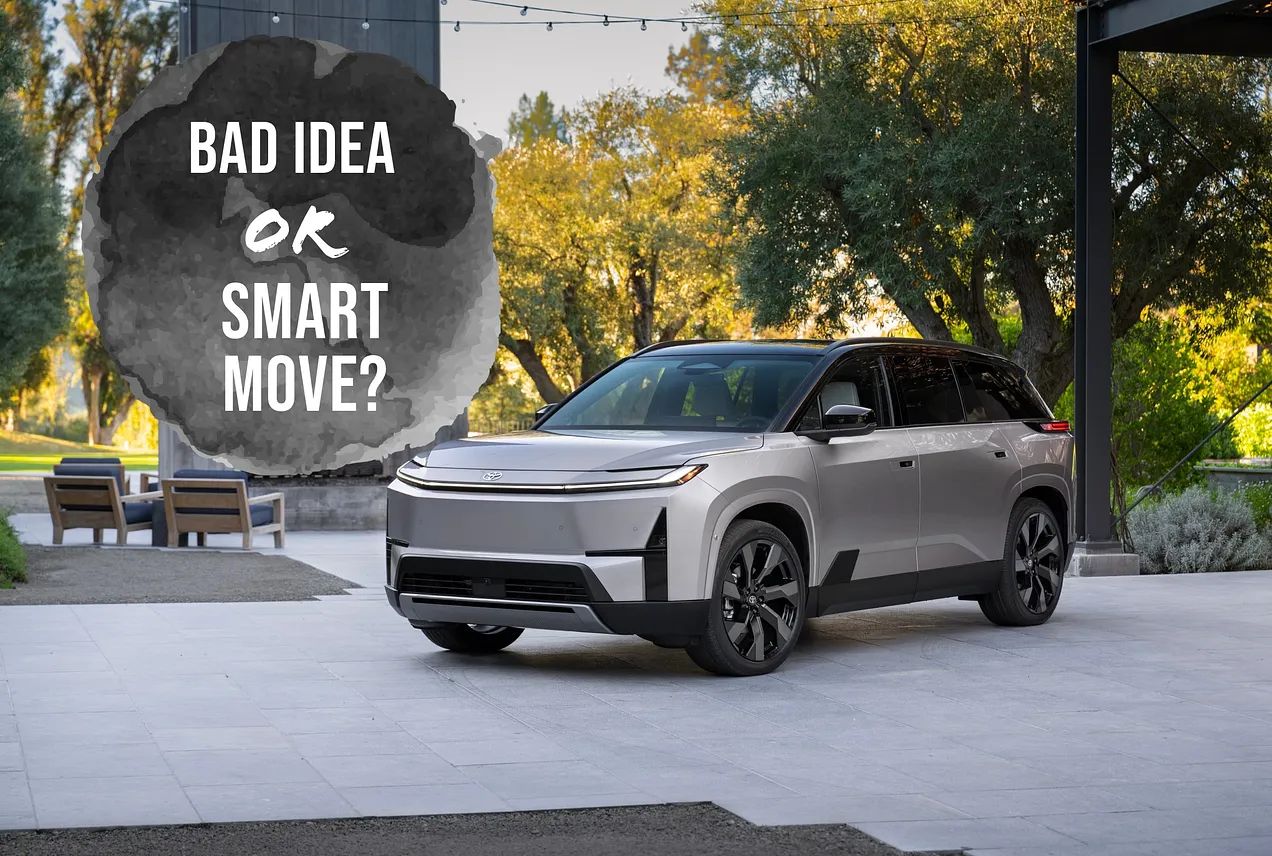
Toyota has unveiled the new 2027 Highlander model and it’s going to be a battery-electric three-row crossover. Same formula as the current-generation Highlander, but now with batteries and no engine. That’s a bold and easily-questioned move for the automaker to take, especially given Toyota’s recent history and (somewhat prescient) resistance to jumping all-in on the EV train.
But there are a few things that work in Toyota’s favor with this big leap. The greatest of those are the declining sales of the Highlander now that it faces competition from Toyota’s own Grand Highlander, whose sales have quickly risen. Buyers in large vehicle categories don’t balk as much at fat price tags like that sported by the Grand Highlander, so that model has quickly risen to match the standard Highlander’s sales totals. The Highlander itself, now fairly aged in its current design, has seen a near 50 percent drop year-on-year. Buyers are looking at the vehicle next to it on the lot and going Grand, it seems.
Meanwhile, the Highlander is facing competition. When it released as a hybrid option, the Highlander was as fuel efficiently cutting-edge as it could get in that segment. It had almost no competition in that regard. Now, almost all of its competitors are either hybrids or battery-electric. The Hyundai Palisade Hybrid recently released as stiff competition for the Highlander while the Honda Pilot saw a refresh that included a rugged-looking TrailSport off-road model.
Buyers in the three-row midsized crossover-SUV segments are trending towards those two motifs: family-friendly fuel sipping or rugged outdoorsy. The Highlander in its current form is the former, but frankly isn’t as good as the newer competition it’s facing.
The Highlander was due a generational change anyway and most of us in the industry expected it to unveil as a 2027 or 28 model year offering in a new design. What we did not expect, especially from Toyota, was a full-on leap into EV territory. Especially given Toyota’s reluctance to do that in recent years and its abject failure with the bZ4X (now the bZ) EV. Probably not in the Highlander EV’s favor is that its platform is the same as the bZ, but Toyota says that the whole thing will be 100 percent made in the USA, which means it will qualify for Trump administration incentives.
The gamble here is whether or not potential Highlander buyers will take this new electric model over the tried-and-true hybrid Grand Highlander or the EV’s more established competitors at Kia and Hyundai.
I’m betting that with declining Highlander sales and (most likely) higher profits with the Grand Highlander, Toyota is not too worried about losing Highlander customers. The sales drop for the Highlander and gains for the Grand Highlander are almost identical and seem to show that most buyers are more interested in the larger model anyway.
Politically, the move also makes sense. The aforementioned 100% USA Made claim appeases the current administration while the electric part hedges against changes in DC down the road. Politics are fickle and of all the automakers, Toyota is the most long-term hedging in terms of that.
So while I initially thought that this move was a failure to read the room on Toyota’s part, I’m now more inclined to think that Toyota is making a smart move to phase out competition for a quickly-rising model while gaining some EV credibility in the bargain. The move doesn’t look so stupid anymore.
This article originally published on the AaronOnAutos Substack.
