

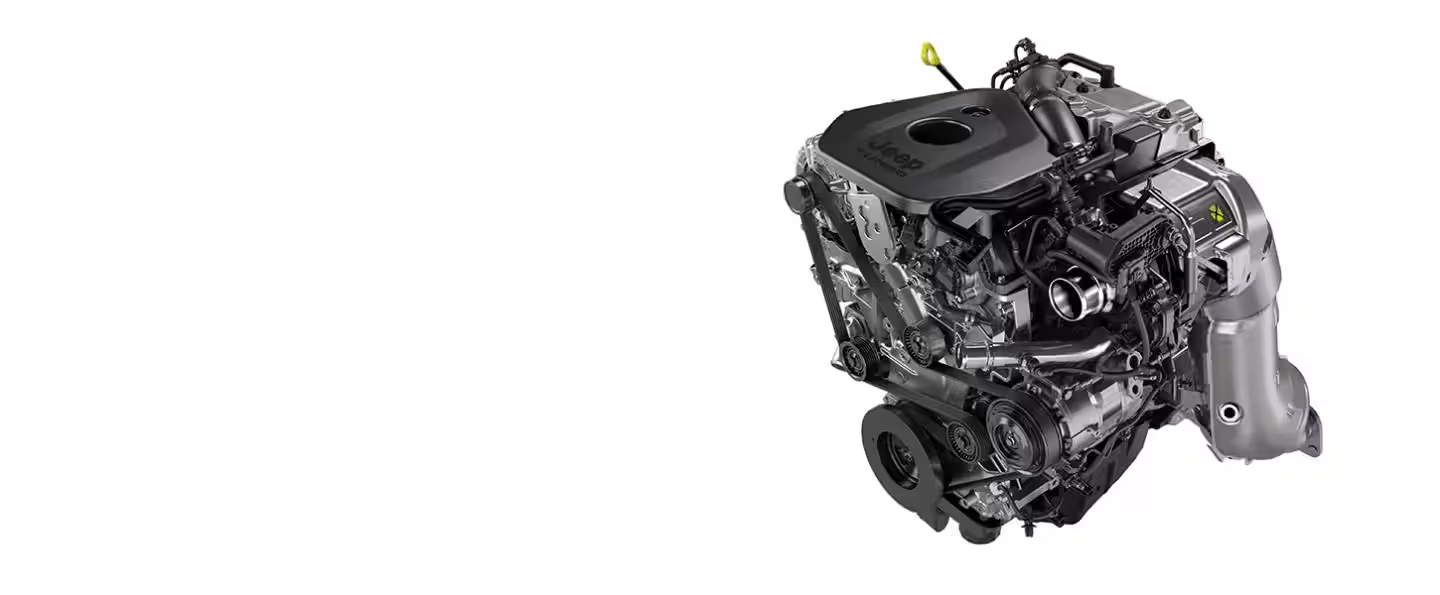
Jeep’s Hurricane 4 is a 2-liter inline-4, turbocharged engine that incorporates cutting-edge technology inspired by Formula 1, including a passive pre-chamber with turbulent jet ignition (TJI), dual spark plugs per cylinder, dual fuel injection, electric cam phasing, and a variable geometry turbocharger capable of up to 35 PSI of boost pressure.
Turbulent jet ignition is a sophisticated combustion method that enhances power output and fuel efficiency. The engine uses a small pre-chamber where a spark plug ignites a mixture of air and fuel. This ignition produces turbulent jets of flame that shoot into the main combustion chamber, igniting the main air-fuel mixture rapidly and completely. This process reduces the likelihood of engine knock and improves both power and efficiency.
Key Specifications of the Hurricane 4 Engine
- Displacement: 2.0 liters inline-4
- Power Output: 324 horsepower
- Torque: 332 lb-ft
- Compression Ratio: 12:1 (high for a turbocharged engine)
- Turbocharger: Variable geometry turbo with up to 35 PSI boost
- Fuel Injection: Dual system with port and direct injection
- Ignition: Dual spark plugs per cylinder
Design Considerations of the Pre-Chamber
The pre-chamber design is critical for optimal combustion. It features eight radial holes approximately 1 millimeter in diameter and one central hole about half a millimeter wide. The size and number of holes are carefully engineered to control the energy and direction of the turbulent jets, preventing damage to the piston and ensuring efficient combustion.
To prevent carbon deposits clogging the pre-chamber holes, the engine benefits from the cleaning properties of fuel during the compression stroke and the extremely high temperatures within the pre-chamber that burn off deposits.
Miller Cycle Operation
The Hurricane 4 engine operates on the Miller cycle by closing the intake valve early during the intake stroke. This early closure increases the expansion ratio relative to the compression ratio and reduces pumping losses, improving overall efficiency. The engine always runs with early intake valve closure, aided by variable cam timing.
Efficiency and Performance
The combination of the Miller cycle and turbulent jet ignition allows the engine to run a high compression ratio of 12:1 while producing substantial power. The engine achieves a brake specific fuel consumption (BSFC) as low as 211.5 grams per kilowatt-hour at 100 kW output, translating to a thermal efficiency of approximately 40.5%. This efficiency is exceptional for a gasoline engine.
Compared to Jeep’s previous engines, the Hurricane 4 uses 10% less fuel while producing 20% more power than the current 2.0L turbo in the Wrangler. It also outperforms the 3.6L V6 in the Jeep Grand Cherokee in power, torque, fuel economy, and acceleration.
Dual Spark Plugs and Fuel Injection
Each cylinder has two spark plugs: one in the pre-chamber and one in the main chamber. The pre-chamber spark plug always fires, but the timing between the two plugs varies depending on engine load:
- Low Load: Main chamber spark plug fires first, followed by the pre-chamber plug, aiding catalyst heating and combustion consistency.
- Medium Load: Pre-chamber plug leads, then the main chamber plug fires, with the pre-chamber ignition dominating.
- High Load: Only the pre-chamber spark plug fires to avoid damage to the main plug due to high temperature and pressure.
The engine also uses dual fuel injection systems:
- Port Injection: Used primarily at idle and low loads for quieter operation and lower pressure.
- Direct Injection: Used more at higher loads for better combustion control and knock resistance.
Variable Geometry Turbocharger
The Hurricane 4 features a variable geometry turbocharger (VGT), a technology first introduced in production gasoline cars by Porsche in 2006. The VGT adjusts the angle of internal vanes to control exhaust gas flow, optimizing turbo spool-up and boost pressure across different engine speeds.
This system can reduce or increase exhaust restriction to balance turbocharger speed and boost output. The engine also includes a wastegate, primarily used during cold starts to help heat the catalytic converter by bypassing the turbo.
The peak boost pressure of 35 PSI is a maximum value rarely reached during normal operation, typically used to compensate for high altitude or hot ambient conditions.
Historical Context and Impact
The Hurricane 4 engine represents a significant advancement over older Jeep engines. For example, a Jeep Cherokee XJ had a 4.0L inline-six producing 190 horsepower, whereas this new 2.0L four-cylinder produces 324 horsepower. Similarly, the 4.7L V8 in an early 2000s Jeep Grand Cherokee made 235 horsepower, nearly 100 less than the Hurricane 4.
Despite its high power output, the Hurricane 4 maintains structural enhancements to handle the increased stresses and focuses equally on efficiency and power, making it a remarkable achievement in mainstream engine technology.
Conclusive Summary
Jeep’s Hurricane 4 engine brings Formula 1-inspired turbulent jet ignition technology to the mass market, combining advanced combustion methods, dual spark plugs, dual fuel injection, Miller cycle operation, and a variable geometry turbocharger. This results in an engine that delivers impressive power and torque while achieving exceptional fuel efficiency and emissions performance. It marks a new era for four-cylinder engines in mainstream vehicles, showcasing how high-performance technology can be made accessible and practical for everyday drivers.
