

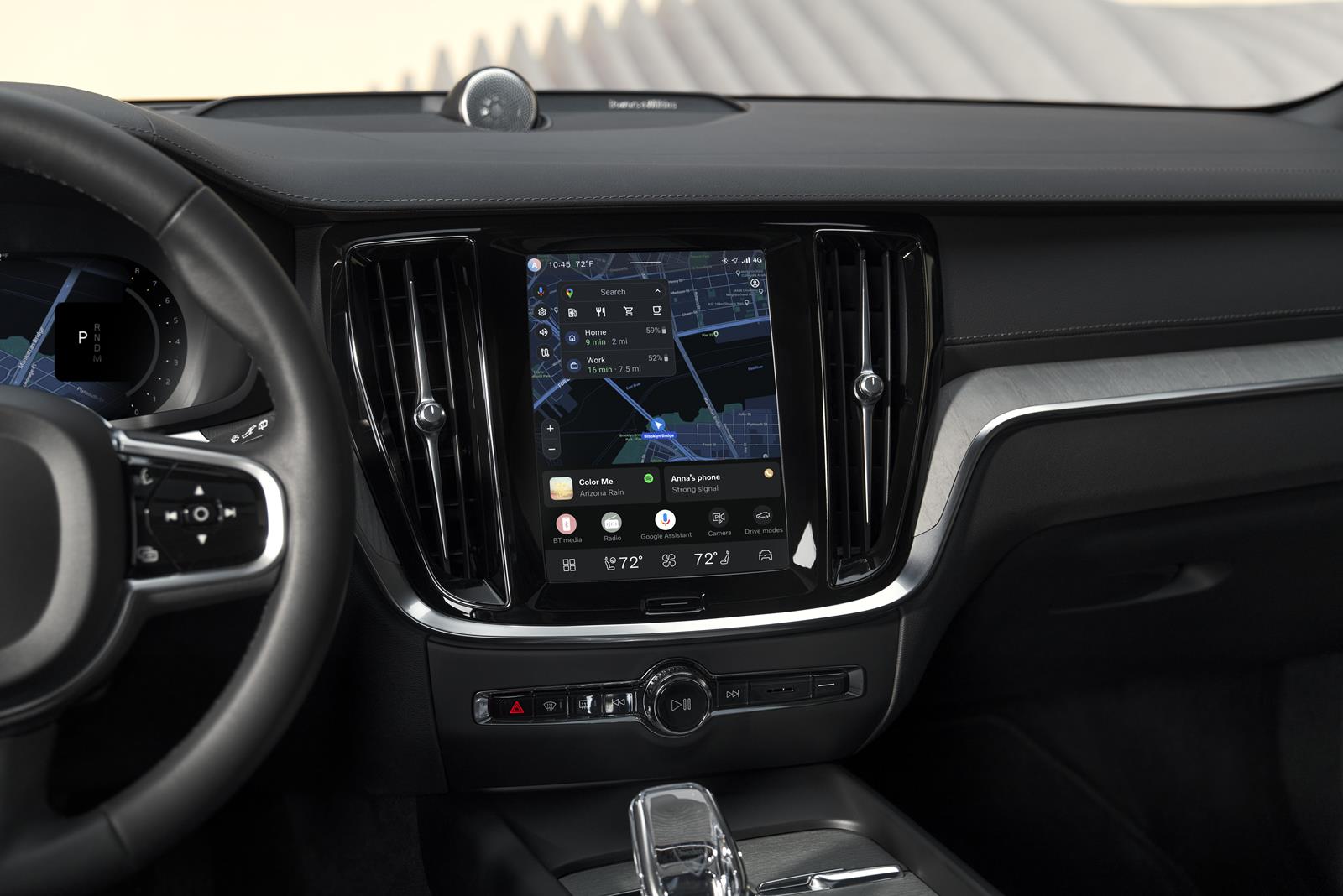
Volvo Cars is launching what it calls one of the biggest over-the-air (OTA) software updates in automotive history, delivering a redesigned user experience to approximately 2.5 million vehicles across 85 countries.
The new interface, dubbed Volvo Car UX, will roll out free of charge to customers driving Volvo models with Google built-in, including vehicles produced as far back as 2020. Built on the Android Automotive operating system, the update reflects Volvo’s long-term strategy of improving vehicles continuously through software enhancements rather than limiting upgrades to new model years.
At the heart of the update is a redesigned central display aimed at reducing driver distraction and minimizing the number of taps required to access core features.
The home screen now prominently displays frequently used apps and controls such as navigation, media, and phone. Drivers following directions in Google Maps, for example, can now adjust music without leaving the navigation screen — a small but meaningful usability improvement.
A new contextual bar dynamically adapts to driving conditions. At low speeds, the interface can surface exterior camera controls to assist with maneuvering in tight spaces. The overall layout also features a more modern visual refresh informed by real-world driver feedback and usage data.
Consistency Across the Lineup
One of the most notable aspects of the update is its scope. Owners of older models like the XC40 will receive the same contemporary interface philosophy found in newer flagships such as the EX90. That consistency creates a unified digital experience across the Volvo portfolio, regardless of model year.
For plug-in hybrid drivers, accessing electric-only driving is now simpler. The “Drive Modes” control is available directly from the home screen, allowing one-tap access to “Pure” mode for electric operation. The streamlined interface gives drivers quicker control over how they use their powertrain.
Alongside the UX refresh, Volvo is enabling customers with Google built-in — but without Pilot Assist — to purchase and download the advanced driver assistance feature directly to their vehicles.
The update also prepares eligible models for the upcoming integration of Google Gemini, a next-generation conversational AI assistant expected to arrive later this spring, further enhancing the in-car digital experience.
Software-Defined Future
With this sweeping OTA rollout, Volvo continues to position itself as a software-forward automaker. By delivering meaningful upgrades to vehicles already on the road, the company reinforces its strategy of making cars that improve over time — not just at purchase.
For millions of Volvo drivers, the upgrade won’t require a dealership visit. Just a download.
