

For years, the American auto industry operated under one unshakable assumption:
Bigger trucks equal better trucks.
Half-ton pickups grew into rolling office towers with leather interiors, panoramic sunroofs, massaging seats, and monthly payments large enough to qualify as emotional trauma. Modern full-size trucks became astonishingly capable machines. Capable of towing mountains, hauling entire Home Depot locations, and draining bank accounts at roughly equal speed.
Then something unexpected happened. A lot of Americans realized they didn’t actually need a vehicle capable of towing the moon.
They just needed a truck.
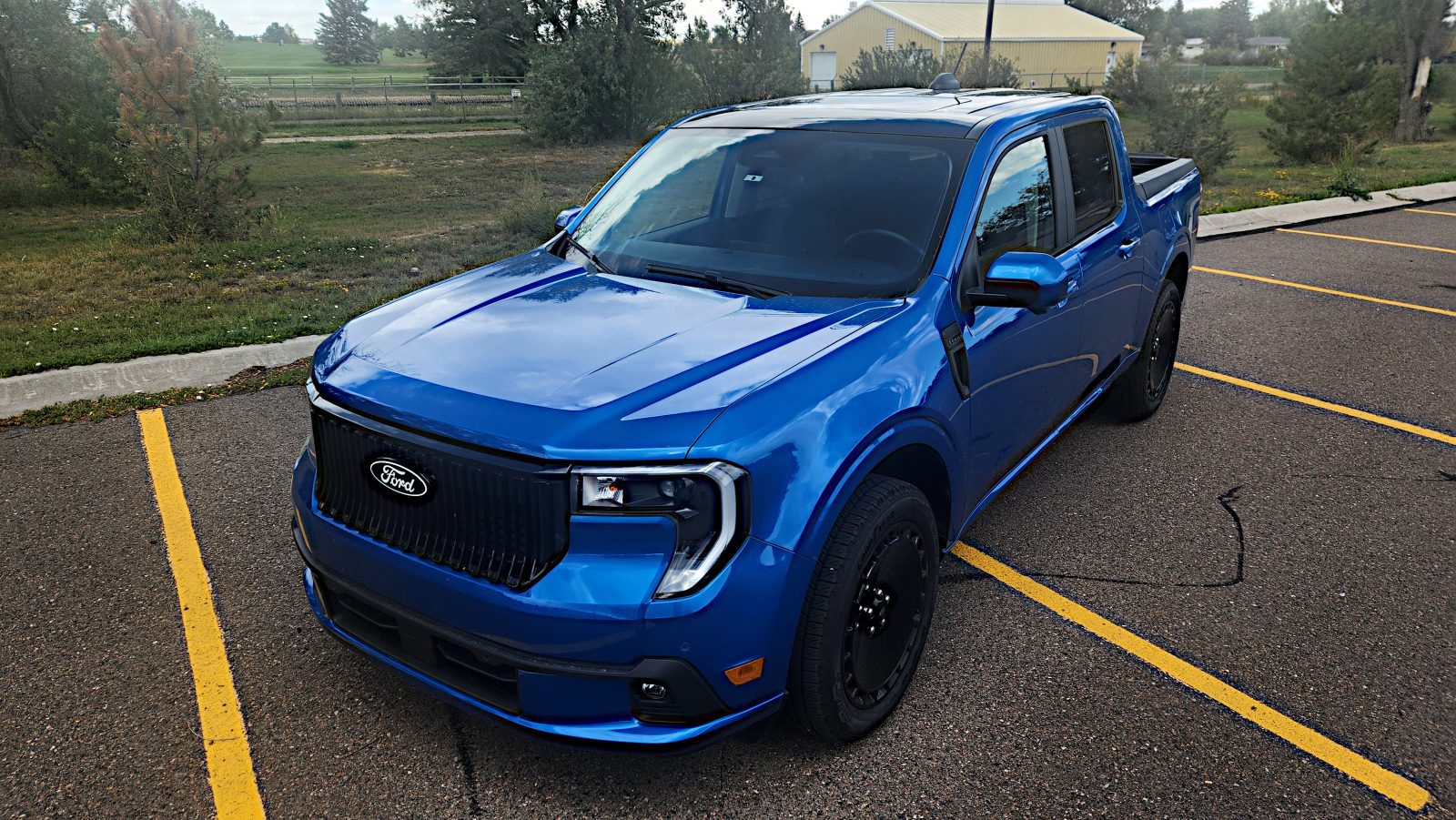
That realization is fueling the explosive rise of compact pickups like the Ford Maverick, a vehicle that has rapidly become one of the hottest products in the industry. Ford sold more than 155,000 Mavericks in 2025 alone, with demand driven largely by affordability and hybrid efficiency.
And the Maverick isn’t succeeding because it’s flashy. It’s succeeding because it quietly solves problems Americans actually have.
Trucks became absurdly expensive
The average new full-size pickup now costs enough to rival a house payment. For years, automakers chased profits by stuffing trucks with:
- luxury interiors
- giant infotainment screens
- off-road packages
- increasingly massive dimensions
- every acronym in the safety-technology dictionary
That strategy worked extremely well. At least until affordability started collapsing.
Consumers in 2026 are increasingly exhausted by:
- rising vehicle prices
- high interest rates
- expensive insurance
- rising fuel costs
Compact trucks suddenly look like sanity. The Maverick, in particular, landed directly in the gap between “I need utility” and “I do not wish to finance a spacecraft.” Ford itself has openly credited affordable trucks and hybrids as major drivers of its recent sales growth.
Most truck owners don’t use full-size truck capability
This is the part of the conversation that truck enthusiasts occasionally treat like forbidden knowledge. Most pickup owners don’t regularly tow heavy trailers. Most don’t haul construction equipment daily. And most don’t need 12,000 pounds of towing capacity.
A huge percentage of Americans use trucks for:
- home improvement projects
- camping
- bicycles
- furniture
- mulch
- occasional towing
- outdoor hobbies
Compact pickups handle all of that perfectly well. The Maverick’s greatest trick is understanding that many buyers want truck versatility without truck excess. It’s basically the automotive equivalent of realizing you don’t need a commercial-grade flamethrower to light a barbecue.
Fuel economy suddenly matters again
One reason compact trucks are exploding in popularity is brutally simple: Gasoline remains expensive.
The hybrid version of the Ford Maverick delivers fuel economy numbers that would have sounded like science fiction to truck buyers a decade ago. Meanwhile, full-size pickups still consume fuel with the enthusiasm of a cruise ship escaping a hurricane.
Consumers increasingly want:
- utility
- cargo space
- practicality
..but they also want:
- fewer gas station visits
- lower ownership costs
- manageable commuting expenses
Compact trucks hit that sweet spot. And unlike many full-size trucks, they fit into parking spaces designed by normal people rather than airport engineers.
Small trucks drive like normal vehicles
This matters more than truck culture likes admitting. Modern full-size pickups are enormous. Driving one through downtown traffic can feel like piloting a medium-sized office building through a crowded mall parking lot while trying not to annihilate shopping carts and innocent shrubbery.
Compact pickups feel dramatically easier to live with. The Maverick rides on a unibody platform rather than a traditional body-on-frame truck chassis, giving it more car-like handling and ride quality. That makes it especially appealing to buyers transitioning from crossovers or sedans.
For many consumers, compact trucks offer:
- easier parking
- better ride comfort
- less intimidating size
- simpler daily usability
They’re trucks designed for modern suburban life instead of cattle ranches and construction sites. Not everybody needs to cosplay as a pipeline foreman during grocery runs.
The hybrid powertrain changed everything
The hybrid Maverick may ultimately be remembered as the vehicle that fundamentally reshaped the compact truck market.
For decades, small pickups were associated with compromise:
- cheap interiors
- weak engines
- stripped-down features
- uncomfortable rides
The Maverick changed that formula by combining:
- modern technology
- decent comfort
- practical utility
- excellent fuel economy
- affordable pricing
Ford’s hybrid sales surged nearly 22% in 2025, with the Maverick playing a major role in that growth.
Consumers discovered they could have:
- a usable truck bed
- crossover-like comfort
- hybrid efficiency
- manageable pricing
That combination turned out to be incredibly powerful.
Younger buyers don’t romanticize giant trucks the same way
Millennial and Gen Z buyers approach vehicles differently than previous generations.
Many younger consumers prioritize:
- affordability
- practicality
- efficiency
- urban usability
- flexibility
They’re less attached to the idea that a “real truck” must resemble a mobile oil refinery with suspension travel measured in geological units.
Compact trucks fit younger lifestyles better:
- apartments
- urban parking
- weekend recreation
- side hustles
- smaller households
The Maverick feels less like a traditional work truck and more like a multi-purpose lifestyle tool. Which, frankly, is what many buyers actually want.
Automakers ignored this market for too long
One of the wildest parts of the compact truck boom is how obvious it seems in hindsight. For years, automakers largely abandoned small pickups in America because larger trucks generated far bigger profits. The compact segment withered while consumers were pushed toward midsize and full-size models.
Then the Maverick arrived and immediately exploded in popularity. Oops.
Competitors are now scrambling to respond. Rumors of future compact pickups from multiple brands continue circulating as automakers realize buyers desperately want affordable utility vehicles again. Online discussion around the segment has intensified as consumers openly compare compact truck practicality against increasingly bloated full-size models.
The industry spent years convincing itself Americans only wanted giant trucks. Turns out Americans mostly wanted trucks they could actually afford.
Compact trucks feel refreshingly honest
There’s also something psychologically appealing about compact pickups. Modern full-size trucks increasingly feel like luxury products pretending to be work vehicles. Many cost more than premium European sedans while featuring interiors that resemble upscale hotel lounges. Compact trucks feel more honest. They embrace utility without theatrical excess.
The Maverick doesn’t pretend to be an off-road apocalypse machine capable of climbing Everest while towing a yacht full of elk hunters. It’s just useful.
That simplicity resonates strongly in an era where many vehicles feel overcomplicated, oversized, and aggressively expensive.
This may only be the beginning
The compact truck segment still feels underdeveloped.
If current trends continue, expect:
- more hybrid compact pickups
- affordable electric small trucks
- crossover-based utility vehicles
- expanded customization options
- lifestyle-focused trims
Automakers are finally realizing many consumers want something between:
- a crossover
and - a rolling suburban fortress with 35-inch tires
The compact pickup occupies that middle ground beautifully. And right now, that middle ground may be the hottest place in the American auto market. Because after years of excess, consumers are rediscovering something the industry forgot: Sometimes a smaller truck is exactly enough truck.
