

There are some things in the automotive world that simply refuse to die. The manual transmission is one. Body-on-frame trucks are another. And apparently, the good old 350-cubic-inch V8 is one too.
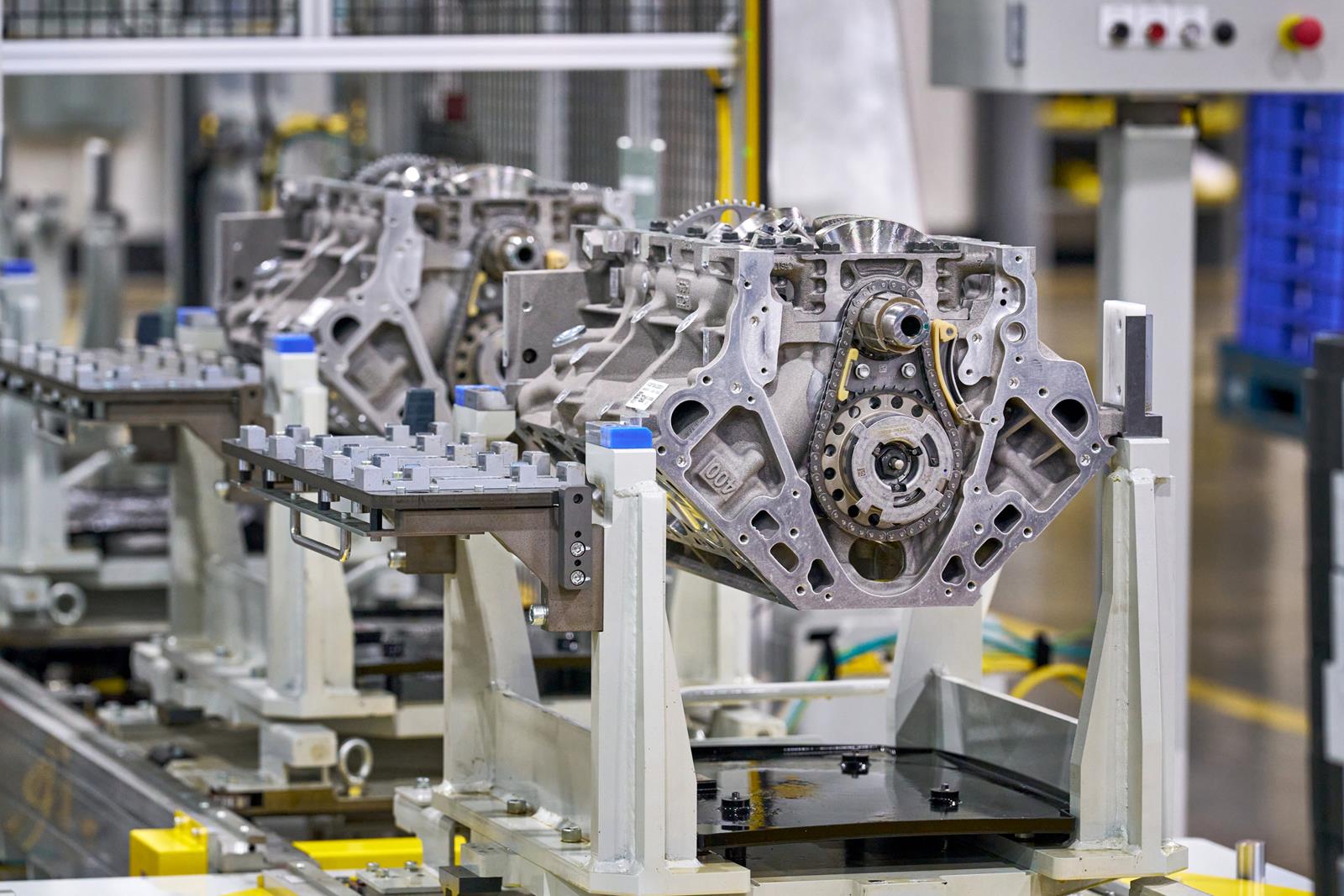
For 2027, General Motors is introducing two all-new naturally aspirated V8 engines for the next-generation Chevrolet Silverado 1500 and GMC Sierra 1500. The new L76 5.7-liter and L78 6.6-liter V8s represent the sixth generation of GM’s Small Block architecture, bringing back the familiar 350- and 400-cubic-inch displacements while adding considerably more modern engineering.
Because apparently, “bigger V8” was still an engineering strategy that GM was willing to try.
The engines join the LS6 6.7-liter V8 developed for the 2027 Chevrolet Corvette lineup, making the sixth-generation Small Block family considerably larger than its name might suggest. The new truck engines also continue an architecture that traces its basic dimensions all the way back to the original Small Block introduced in 1955.
That’s quite a family reunion.
More Cubic Inches, More Everything
The L76 replaces GM’s 5.3-liter V8, while the L78 takes the place of the 6.2-liter engine. Both gain displacement through a 6-mm increase in piston stroke.
The resulting 5.7-liter L76 produces 402 horsepower and 428 lb-ft of torque, while the 6.6-liter L78 generates 481 horsepower and 501 lb-ft of torque.
Those numbers put the L78 in particularly interesting territory. GM calls it the most powerful naturally aspirated V8 in its class.
The 5.7-liter also gets an important party trick: when properly equipped, the 2027 Silverado 1500 can tow up to 13,700 pounds, which GM says is the best maximum towing rating in the full-size pickup segment. The Sierra 1500’s maximum rating is 13,500 pounds.
The L78, somewhat counterintuitively, is rated to tow less: 9,700 pounds in the Silverado and 9,400 pounds in the Sierra. That’s a useful reminder that horsepower isn’t the same thing as overall truck capability. Gear ratios, chassis configuration, cooling, payload, tires and the rest of the truck all get a vote.
In other words, you can’t simply slap a giant V8 into a pickup and declare it a tow rig.
It’s Still a Small Block
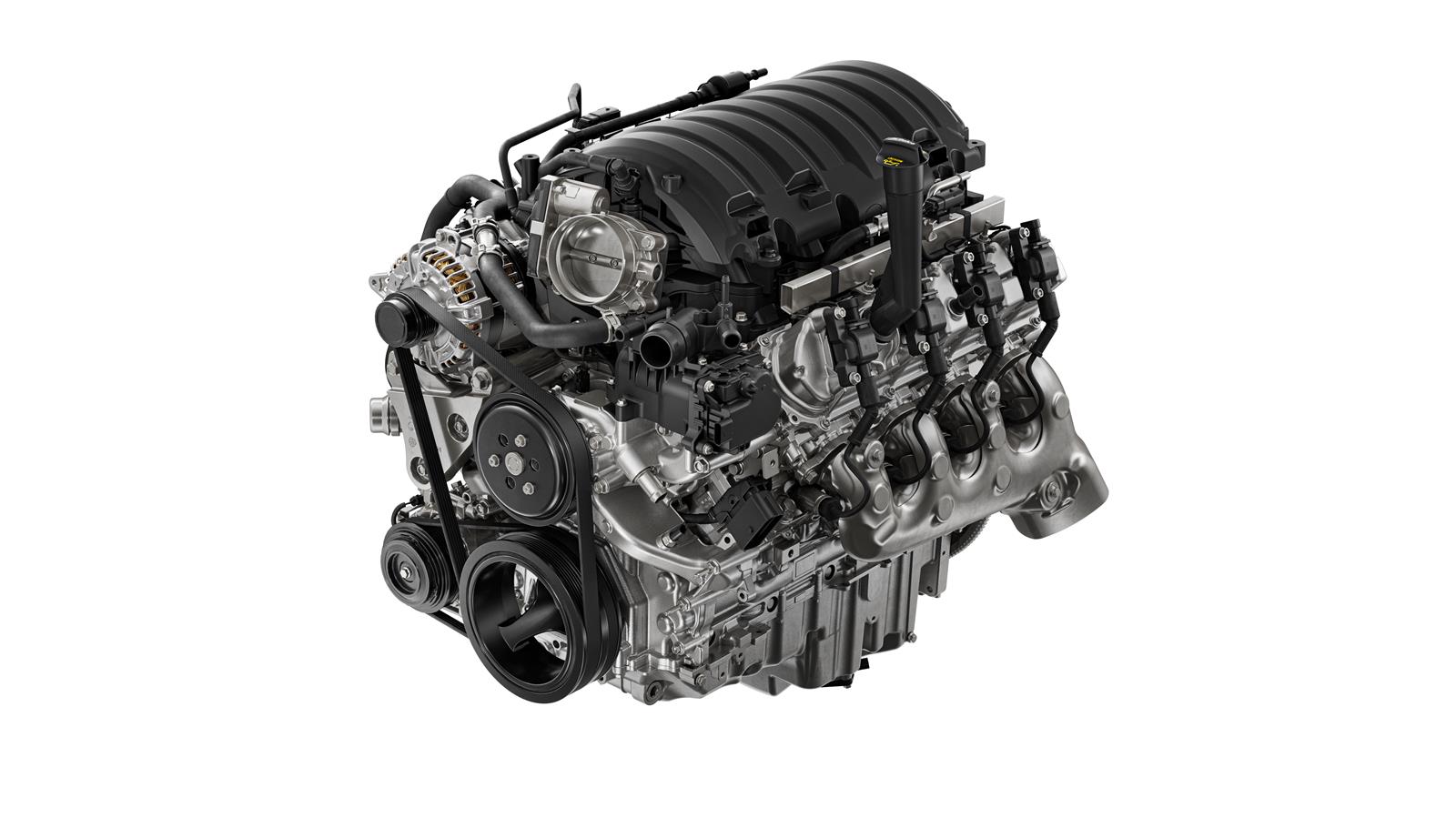
Despite the new displacement and technology, GM hasn’t abandoned the fundamental architecture that has defined its Small Block family for generations.
The engines retain the familiar 4.40-inch cylinder bore spacing used across more than 100 million Small Block engines since 1955.
GM engineers then applied modern simulation, modeling and durability testing to the architecture.
The recipe includes higher compression ratios, larger throttle bodies and new intake manifolds with tuned runners designed to improve airflow. Both engines also use a dual-fuel injection system combining direct injection and port fuel injection.
That combination gives GM engineers more opportunities to optimize combustion for power, efficiency and emissions depending on operating conditions.
There’s also a new lubrication system incorporating a continuously variable oil pump, an on-engine oil cooler and revised oil-feed locations intended to provide more consistent oil pressure.
Considering how much abuse pickup engines can see, that’s the kind of engineering that matters more than a marketing department’s favorite horsepower number.
Four Engines, One Pickup Family
GM isn’t abandoning its other powertrain choices.
The next-generation Silverado 1500 and Sierra 1500 will launch with four engine options: the new 5.7-liter V8, the new 6.6-liter V8, an enhanced TurboMax four-cylinder and the 3.0-liter Duramax diesel.
The updated TurboMax now produces 350 horsepower and 455 lb-ft of torque, representing increases of 40 horsepower and 25 lb-ft. It also moves to a 10-speed automatic transmission and receives a new turbocharger, upgraded fuel injection, redesigned pistons and improved thermal management.
Then there’s the Duramax.
The 3.0-liter turbo-diesel returns with 305 horsepower and 495 lb-ft of torque. GM continues to position it as the long-distance and towing specialist, with updates to components including the turbocharger vanes, NOx sensor, fuel injectors and sealing systems.
And for people who consider stopping at a fuel station an interruption to their life, the available 34-gallon tank gets interesting.
GM says the 34-gallon tank, when paired with the Duramax, can provide more than 900 miles of highway driving range.
That’s enough range to make the average road trip feel less like a series of increasingly desperate negotiations with the fuel gauge.
The Numbers Tell an Interesting Story
The engine lineup also illustrates how complicated modern pickup capability has become.
| Engine | Horsepower | Torque | Max Tow — Silverado | Max Tow — Sierra |
|---|---|---|---|---|
| Enhanced TurboMax | 350 | 455 lb-ft | 9,400 lbs | 9,400 lbs |
| 3.0L Duramax | 305 | 495 lb-ft | 12,000 lbs | 12,100 lbs |
| L76 5.7L V8 | 402 | 428 lb-ft | 13,700 lbs | 13,500 lbs |
| L78 6.6L V8 | 481 | 501 lb-ft | 9,700 lbs | 9,400 lbs |
The 5.7-liter is arguably the most interesting of the bunch. It produces considerably more horsepower than the diesel and beats it on maximum towing capacity, while avoiding the additional emissions hardware associated with a modern diesel.
The diesel, meanwhile, still has a substantial torque advantage over the 5.7-liter and should remain attractive to buyers who spend long hours towing or traveling between fuel stops.
And then there’s the 6.6-liter.
With 481 horsepower and 501 lb-ft of torque, it’s the engine for people who look at the other three choices and think, “But what if I wanted more?”
GM has apparently decided that is a perfectly reasonable question.
The 10-Speed Gets Everyone Together
All four engines will be paired with a 10-speed automatic transmission in the next-generation trucks.
That means GM isn’t using the new V8s simply as an excuse to throw more power at the existing trucks. The company says the next-generation powertrains have been developed as a complete system, with the transmission intended to provide smoother shifts and better power delivery.
GM is also putting the new engines through a substantial real-world validation program.
By the time the next-generation trucks reach dealerships later this year, development teams expect to have accumulated more than 1.5 million miles of on-road validation.
That’s a lot of miles.
It’s also the sort of testing that matters when an engine is expected to spend its life towing trailers, hauling loads, sitting in traffic, crawling around off-road and commuting to work before doing it all again tomorrow.
GM Is Betting on the V8
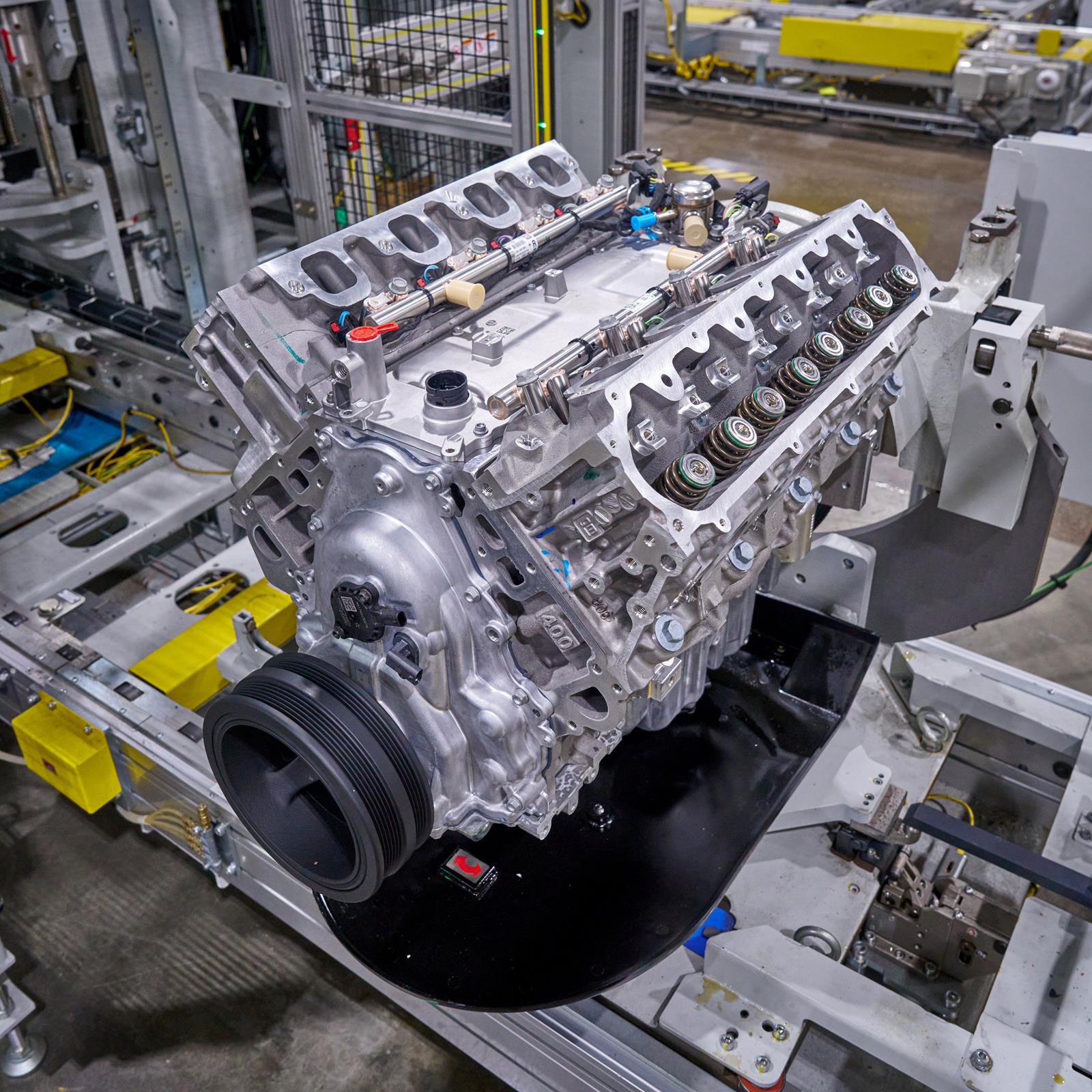
The new engines are also a significant manufacturing investment.
Production will involve GM’s Flint Engine Operations, Tonawanda Propulsion in New York and St. Catharines Propulsion in Ontario.
GM previously announced $888 million in investment at Tonawanda for sixth-generation V8 production, while its Canadian operations are receiving C$691 million at St. Catharines for sixth-generation V8 manufacturing.
That’s a considerable commitment to an engine configuration that many automakers have spent the last decade trying to make smaller, turbocharged, electrified or simply disappear.
GM is clearly not ready to give up on the V8.
And perhaps that’s the biggest story here.
The sixth-generation Small Block isn’t simply a nostalgic exercise in bringing back the 350 and 400. GM has taken a fundamentally old-school engine architecture and added modern injection, thermal management, lubrication, airflow and combustion technology.
The result is a pair of naturally aspirated V8s producing numbers that would have been considered serious performance-engine territory not all that long ago.
The 2027 Chevrolet Silverado 1500 and GMC Sierra 1500 are scheduled to arrive at dealerships later this year, with pricing and additional vehicle details to come.
For truck buyers, the message is unusually straightforward: if you still want a V8, GM isn’t just keeping one around. It’s giving you more of it.
