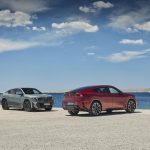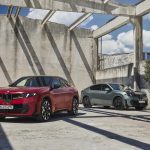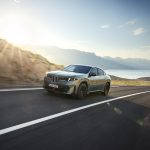

BMW is expanding its next-generation electric vehicle lineup with the new iX4, an all-electric SUV coupe that combines the automaker’s latest Neue Klasse technology with sporty styling, high-performance electric powertrains, and a projected driving range of up to 428 miles.
The new BMW iX4 is scheduled to launch in March 2027 as the iX4 50 xDrive, with the high-performance iX4 M60 xDrive following shortly afterward. Both models feature dual electric motors and all-wheel drive, but the M60 turns up the performance considerably, delivering 603 horsepower and 645 lb-ft of torque.
Beyond the power figures and sloping roofline, the iX4 introduces BMW’s sixth-generation eDrive technology, a new battery design, faster charging capabilities, bidirectional charging, and a substantially revised digital interface. It also brings an expanded suite of driver assistance systems designed to make the driving experience more intuitive without removing the human from the equation.
In other words, BMW wants its latest electric SUV to be more than an exercise in making a battery-powered vehicle look fast while parked outside a coffee shop.
A Sporty New Take on BMW’s Electric SUV
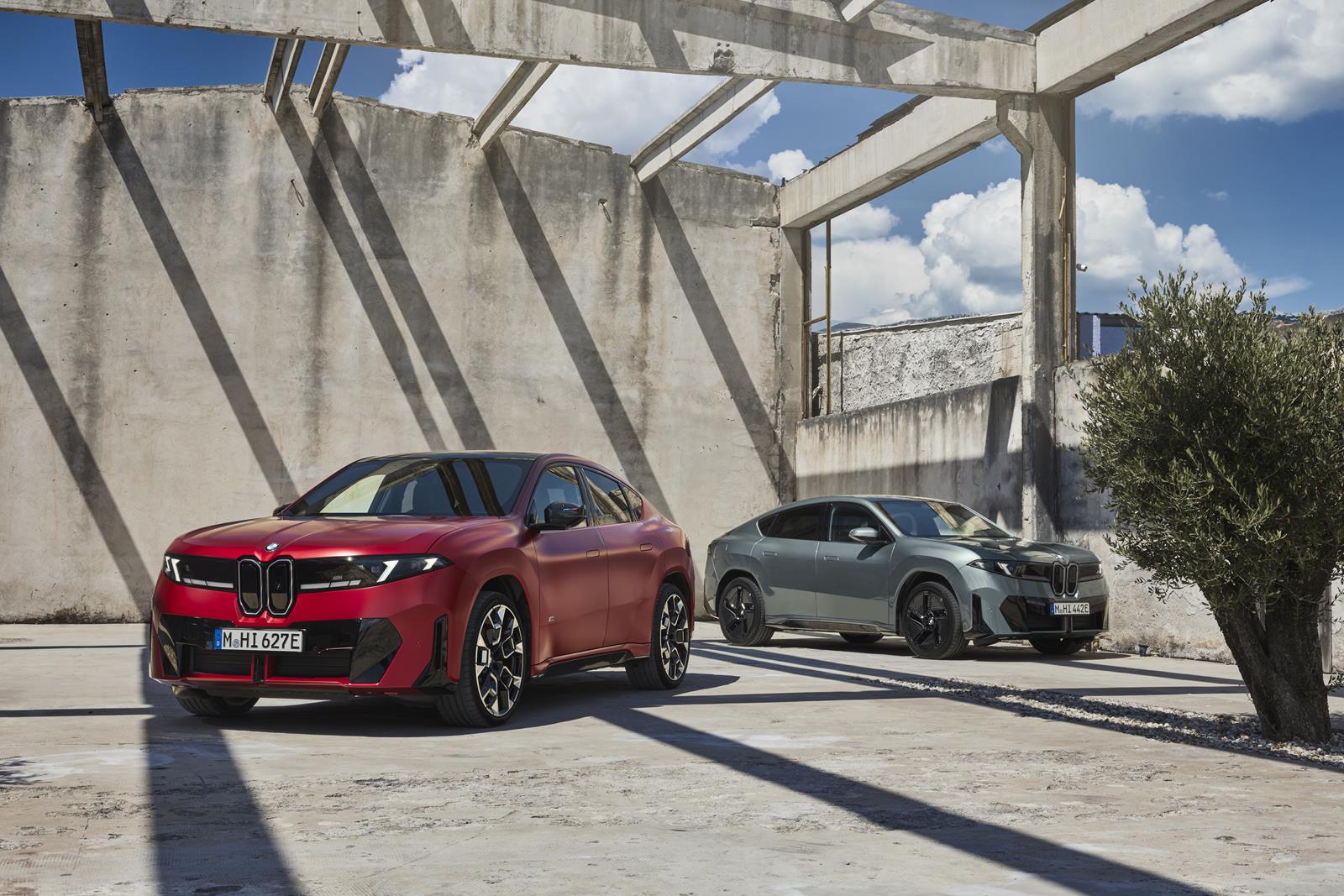
The iX4 represents the third model in BMW’s Neue Klasse lineup, following the iX3 and i3. Its design emphasizes clean surfaces, a long wheelbase, short overhangs, and a sloping roofline that gives the SUV a coupe-like profile.
The front end features a new interpretation of BMW’s familiar kidney grille, paired with twin headlights and integrated sensors. Active air flap control and other aerodynamic improvements help the iX4 achieve a drag coefficient of 0.23, an important factor in maximizing electric driving range.
A panoramic sunroof with climate comfort glazing comes standard, extending across the roof to create a more open cabin. At the rear, slim horizontal taillights emphasize the vehicle’s width, while a pronounced rear spoiler helps manage airflow.
BMW includes its M Sport package as standard equipment, bringing model-specific exterior details and 20-inch M light-alloy wheels. The iX4 M60 xDrive upgrades to 21-inch wheels and adds distinctive M styling, including a specially developed rear spoiler, black diffuser, and M-specific lighting details.
The M60 also comes standard with BMW Iconic Glow exterior lighting, which illuminates the kidney grille and adds lighting elements at the rear. The package is optional on the iX4 50 xDrive.
Buyers will be able to choose from nine exterior colors when ordering opens. Additional frozen-finish colors and BMW Individual options will expand the selection later.
The design is clearly intended to communicate performance, even if the coupe-like roofline inevitably raises the usual question about how much practicality gets sacrificed for style. BMW says the long wheelbase and carefully designed roofline preserve generous passenger space, including rear-seat headroom.
The iX4 can also tow up to 4,400 pounds when equipped with the optional trailer hitch, giving it some useful capability beyond transporting occupants and their assorted electronic devices.
Two Electric Powertrains, One Serious Performance Statement
The initial BMW iX4 50 xDrive uses two electric motors producing a combined 463 horsepower and 475 lb-ft of torque. BMW estimates a 0-to-60-mph time of 4.7 seconds and a top speed of 130 mph.
The high-voltage battery provides 112.2 kWh of usable energy, supporting a projected maximum driving range of up to 428 miles. Actual range will depend on factors such as driving conditions, temperature, speed, and equipment.
The iX4 M60 xDrive takes a more aggressive approach. Its dual-motor powertrain produces 603 horsepower and 645 lb-ft of torque, enough to propel the electric SUV coupe from zero to 62 mph in 3.9 seconds. Top speed is electronically limited to 149 mph.
Both models use BMW’s sixth-generation eDrive technology, which combines two different types of electric motors.
The rear axle uses an electrically excited synchronous motor, or EESM, while the front axle employs an asynchronous motor, or ASM. The rear motor serves as the primary drive unit, while the front motor provides additional power and all-wheel-drive capability.
BMW says this combination reduces energy losses by 40%, drive-system weight by 10%, and manufacturing costs by 20% compared with the previous generation.
The EESM design also avoids permanent magnets, instead using electrically excited electromagnets in the rotor. This allows the magnetic field to be adjusted according to operating conditions, helping the motor balance efficiency and performance.
The front asynchronous motor uses induced electrical currents rather than permanent magnets or rotor excitation. Its construction relies on iron and aluminum, contributing to BMW’s efforts to reduce material use and manufacturing costs.
For the M60, BMW has developed a more powerful rear motor and inverter to support the higher output. The model also receives an electronically controlled M Sport differential, adaptive M suspension, and additional chassis tuning intended to improve traction, cornering precision, and body control.
Faster Charging and a New Battery Design
The iX4’s battery technology is another major part of BMW’s Neue Klasse strategy.
The sixth-generation battery uses newly developed cylindrical lithium-ion cells measuring 46 millimeters in diameter and 95 millimeters in height. BMW says these cells deliver a 20% increase in volumetric energy density compared with the prismatic cells used in its fifth-generation technology.
The cells are integrated directly into the battery pack using a cell-to-pack design, eliminating intermediate modules and associated structural components. BMW says this approach reduces weight and cost while improving energy density at the pack level.
The battery also serves a structural role in the vehicle. Its pack-to-open-body construction allows the battery housing to help form the vehicle’s underbody, reducing the need for additional structure and increasing torsional rigidity.
The result should be a lighter, stiffer platform that supports both efficiency and handling.
Charging performance is equally ambitious. The iX4 50 xDrive supports DC fast charging at up to 400 kW, and BMW says an 800-volt high-power charging station can add up to 184 miles of range in 10 minutes.
A 10-to-80% charge takes approximately 21 minutes under the specified high-power charging conditions. Standard AC charging supports up to 15.4 kW.
Those figures should make longer journeys more convenient, assuming drivers can find compatible high-power chargers that deliver the required output. As always, the charger’s capabilities, battery temperature, and other conditions will influence real-world charging speeds.
BMW has also added charging-optimized route planning through BMW Maps. The system can calculate charging stops based on the destination, preferred charging networks, desired arrival charge levels, and estimated charging costs.
It can also use information from previous charging sessions to estimate charging-station reliability and realistic charging performance.
Battery preconditioning prepares the pack for DC charging by bringing it to an appropriate temperature before arrival. Drivers can initiate the process through navigation or activate it manually using the central display or My BMW App.
Another new feature is an intelligent charging flap that can open automatically when the vehicle determines the driver intends to charge. BMW says the system can use learned behavior and the driver’s route toward a known charging location to help identify that intention.
Because apparently even opening a charging-port door is now an opportunity for artificial intelligence to demonstrate its usefulness.
Bidirectional Charging Adds More Flexibility
The iX4 will support bidirectional charging, allowing stored battery energy to serve purposes beyond propelling the vehicle.
BMW is introducing a Multifunction Charger that supports conventional home charging from 120- and 240-volt outlets. With optional adapters, the system can also support Vehicle-to-Load and Vehicle-to-Home applications.
That means the battery can potentially power external electrical devices or supply energy to a compatible home setup.
BMW also offers a Wallbox Plus home charger with adjustable output up to 15.4 kW. The unit supports the North American Charging Standard connector and includes Wi-Fi, Bluetooth, and other connectivity options.
These capabilities could make the iX4 more useful during power interruptions or in situations where portable electricity is valuable. The practical benefits will depend on the compatible equipment, installation requirements, and how owners choose to use the system.
A Digital Cabin Built Around BMW Panoramic iDrive
Inside, the iX4 adopts BMW’s latest Panoramic iDrive interface, powered by BMW Operating System X.
The system combines a 17.9-inch central touchscreen with BMW Panoramic Vision, which projects information across the lower portion of the windshield. An optional 3D head-up display adds spatially rendered navigation guidance and driver assistance information.
The goal is to keep important information in the driver’s field of view while reducing the need to look away from the road.
BMW has also redesigned the multifunction steering wheel around its so-called shy-tech philosophy. Controls illuminate when relevant functions are available, while haptic feedback helps drivers operate infotainment features.
The software supports extensive customization, including adjustable display layouts, widgets, colors, and background images. Up to seven users can sign in with individual BMW IDs, allowing the vehicle to remember their preferences.
Voice control receives a substantial upgrade through the BMW Intelligent Personal Assistant, which incorporates Amazon Alexa+ AI technology. Drivers can use natural language to adjust vehicle functions, manage climate settings, select entertainment, and access other services.
The system can also learn recurring preferences and create routines. For example, an owner who regularly activates the heated steering wheel, seat heating, and windshield defrost at the beginning of a winter drive can configure those actions to occur together.
Entertainment options include video streaming when parked, in-car gaming, and cloud gaming through the Boosteroid app. Amazon Prime Video is scheduled to join the entertainment offering in the second half of 2026.
Some connected services and features will require BMW Digital Premium or other optional subscriptions, so the full digital experience may involve costs beyond the vehicle’s purchase price.
Driving Technology Designed to Work With the Driver
BMW says the iX4’s driving dynamics are managed by a system called Heart of Joy, one of four central computing systems in the vehicle.
It coordinates the drive system, braking, steering-related functions, charging, and energy recuperation. BMW claims the system processes driving dynamics functions ten times faster than previous systems.
The company says this faster coordination helps reduce unnecessary control interventions, improve cornering consistency, and produce more predictable handling.
Regenerative braking also plays a larger role. Under normal driving conditions, the iX4 can slow to a complete stop primarily through energy recuperation, with conventional friction brakes reserved for situations such as emergency braking or more demanding driving.
BMW calls the smooth stopping function Soft Stop, describing it as the smoothest stopping action in the company’s history.
The suspension combines a double-joint spring-strut front axle with a five-link rear axle. Adaptive M suspension is standard on the M60 and optional on the iX4 50 xDrive.
The M60 adds more aggressive chassis tuning, an electronically controlled rear differential, and dedicated M Sport and M Sport Plus driving modes.
Driver assistance technology is another focus. BMW’s Highway Assistant enables attentive hands-free driving on highways at speeds of up to 85 mph where the system is available and its operating conditions are met.
The broader assistance package includes adaptive cruise control, lane-keeping assistance, lane-change warnings, side-collision warnings, and crossing-traffic warnings with emergency braking.
Additional features include emergency steering intervention, assistance for avoiding frontal collisions, and an exit warning system that can delay opening a door when a cyclist is approaching.
These remain driver assistance technologies rather than a replacement for an attentive driver. The systems are designed to work alongside the person behind the wheel, allowing deliberate steering, braking, and acceleration inputs without immediately disengaging assistance in appropriate circumstances.
The Next Step for BMW’s Electric Lineup
The 2027 BMW iX4 combines long-range ambitions, high charging power, new battery construction, and performance that would have seemed exotic in a family vehicle not so long ago.
The iX4 50 xDrive offers a compelling combination of 463 horsepower and an estimated 428-mile range, while the M60 xDrive turns the same basic formula into a 603-hp performance machine.
Its Neue Klasse platform also brings structural battery integration, bidirectional charging, a heavily revised digital interface, and more sophisticated driver assistance technology.
Pricing and some market-specific details have not been provided in the supplied announcement, leaving an important part of the buying equation unanswered.
Still, BMW’s direction is clear. The iX4 is intended to show that an electric vehicle can deliver substantial range, rapid charging, serious performance, and everyday utility without abandoning the company’s emphasis on driving dynamics.
Whether buyers prefer the standard model’s balance of range and power or the M60’s considerably more energetic approach, BMW is making a strong case that its next generation of electric vehicles will be about much more than simply replacing a gasoline engine with a battery and calling it progress.