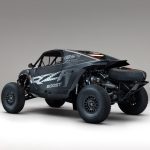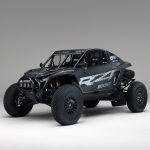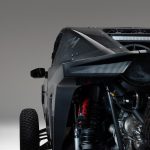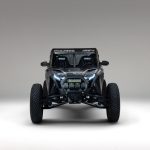

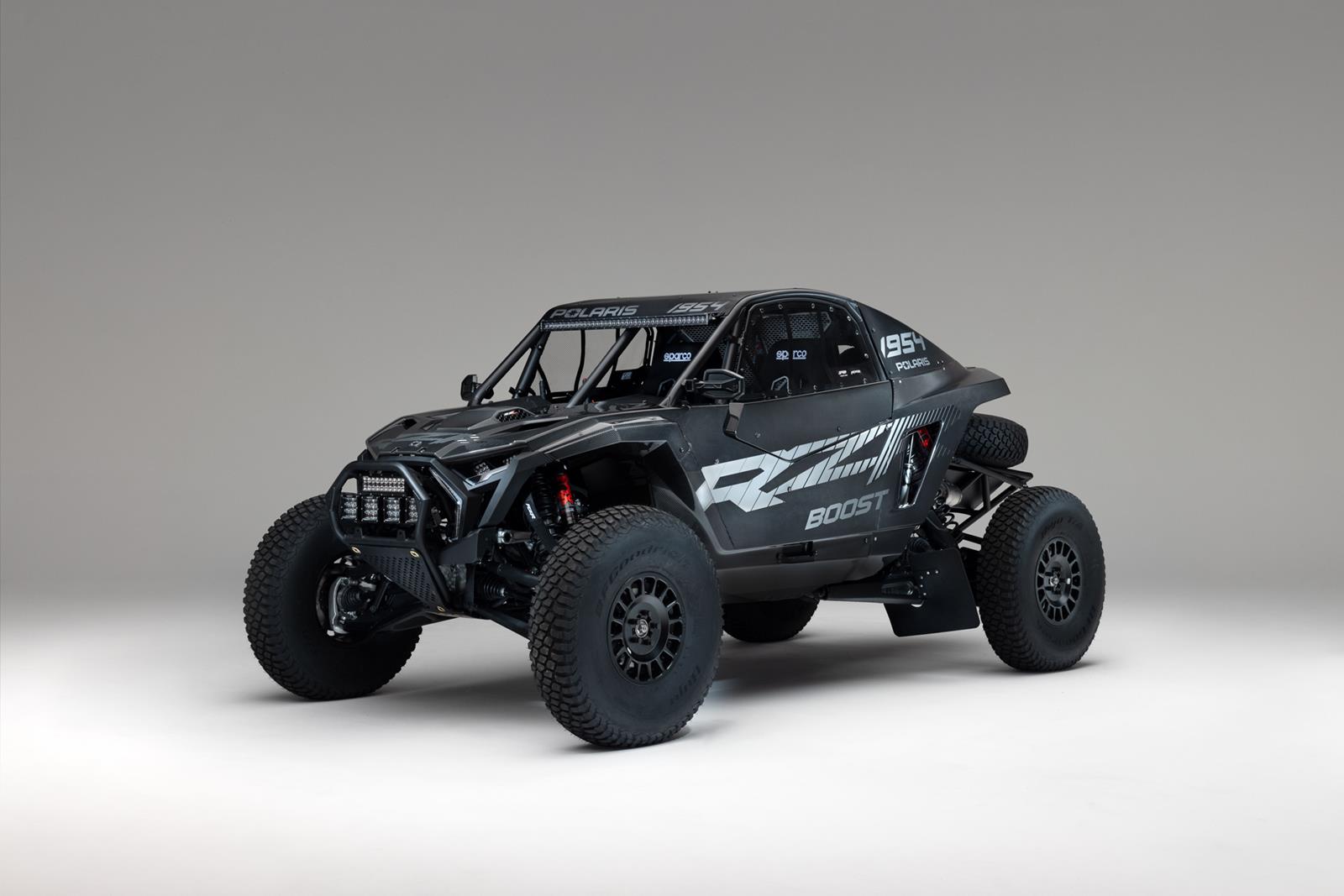
Polaris is turning up the heat in the side-by-side racing world with the introduction of the new RZR Pro R Factory Boost. Unveiled at the company’s annual Camp RZR event at California’s Glamis Imperial Sand Dunes, the new competition machine brings up to 400 horsepower, a reinforced chassis, upgraded suspension and plenty of carbon fiber to the already formidable RZR Pro R platform.
Designed and engineered by Polaris and built in Roseau, Minnesota, the RZR Pro R Factory Boost is intended to take desert racing performance to another level. It builds on the recently introduced production RZR Pro R Boost while incorporating lessons learned from the Gen 2 RZR Pro R Factory race vehicle.
Importantly, the new Factory Boost isn’t replacing the existing RZR Pro R Factory. Instead, Polaris is expanding its competition lineup with two distinct platforms, giving racers more choices depending on their performance requirements and racing ambitions.
And with 400 horsepower available from a turbocharged four-cylinder engine, the new machine isn’t exactly short on ambition.
More Power for the Desert
At the heart of the RZR Pro R Factory Boost is a race-tuned, turbocharged ProStar Fury 2.0-liter four-cylinder engine. Producing up to 400 horsepower, the powerplant is designed to deliver the acceleration needed for competitive desert racing, whether launching off the starting line, passing competitors or maintaining speed across rough terrain.
Power delivery is only part of the equation, however. Desert racing puts enormous demands on a vehicle’s chassis, suspension and cooling systems. Maintaining speed across hundreds of miles of unpredictable terrain requires more than simply installing a bigger turbocharger and hoping for the best.
Polaris has addressed those demands with a substantially revised chassis.
The Factory Boost’s wheelbase grows by 6.5 inches to 111 inches, providing greater straight-line stability at speed. Larger tubing throughout key structural members adds strength and stiffness to handle the punishment associated with high-speed desert competition.
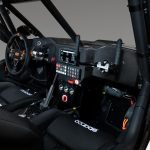
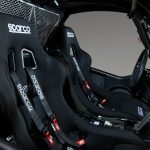
The cockpit and roll cage have also been redesigned. The new cab is two inches wider, providing additional room for drivers and improving legroom. The redesigned cage incorporates additional strength while giving the vehicle a more purpose-built competition-car feel.
That extra space could be particularly welcome during long desert races, when driver comfort becomes more than a luxury. Spending hours bouncing around inside a cramped cockpit is one way to make a race considerably less enjoyable.
Carbon Fiber and Computational Aerodynamics
Polaris has also invested heavily in aerodynamic development. The RZR Pro R Factory Boost wears full carbon fiber bodywork featuring sculpted surfaces and an arched roofline intended to reduce weight and improve aerodynamic efficiency.
Engineers used computational fluid dynamics (CFD) modeling to study airflow at speeds exceeding 100 mph. That work informed the cage design and revised rear body profile, helping optimize airflow around the vehicle.
Aerodynamics might not be the first thing that comes to mind when considering a side-by-side designed to spend its time throwing sand, rocks and dirt in every conceivable direction. However, at desert racing speeds, aerodynamic efficiency and stability become increasingly important.
The carbon fiber construction also helps keep weight under control while providing the structural and bodywork characteristics needed for competition.
More Fuel, Better Suspension and Advanced Electronics
Range is another important consideration in desert racing. The Factory Boost receives a 45-gallon (170-liter) fuel cell, up from the 34-gallon capacity of the previous-generation RZR Pro R Factory.
Polaris estimates the increased capacity provides more than 200 miles of range, potentially reducing the number of pit stops required during competition. In endurance racing, fewer stops can mean valuable time gained over the course of an event.
The electronics package receives an upgrade as well. A fully integrated MoTeC system incorporates an upgraded M150 engine control unit (ECU) and dual power distribution modules (PDMs). The additional power distribution module provides expanded electrical control and management capabilities compared with the Gen 2 Factory platform.
Suspension duties fall to race-tuned DYNAMIX DV Live Valve technology. The three-inch internal bypass shocks feature race-specific components and upgraded one-inch shock shafts designed to improve strength and durability.
Race-specific suspension tuning is intended to maintain control across changing terrain, while a standard FOX steering damper helps absorb large impacts and improve steering control at high speeds.
For a vehicle expected to spend much of its racing career airborne, landing hard and occasionally encountering terrain that looks more like a geological accident than a race course, suspension durability is understandably important.
Two Race Platforms, One Competitive Goal
According to Alex Scheuerell, Polaris’ Director of Off-Road Motorsports, the new Factory Boost builds on the success of the Gen 2 RZR Pro R Factory, which has established itself as a dominant competitor in major off-road racing events.
The company’s goal is to continue pushing performance boundaries while giving its factory team and customer racers additional options for competition.
The strategy makes sense. Rather than retiring a proven race platform, Polaris is adding another option with a different performance envelope. Racers can choose between the existing RZR Pro R Factory and the more powerful, extensively upgraded Factory Boost.
The new machine will make its competition debut at the 2027 King of the Hammers event, where RZR Factory Racing plans to enter it in multiple races.
A $200,000 Side-by-Side
Of course, all this performance comes at a price. The RZR Pro R Factory Boost starts at $200,000, putting it well beyond the typical side-by-side purchase and firmly into dedicated competition machinery territory.
Polaris is accepting orders in limited quantities through exclusive distributor SCI Distribution LLC. The first order window closes February 15, 2027. SCI will manage sales and post-sale customer support, while Polaris handles production.
For racers looking for a factory-developed, competition-ready desert machine, the Factory Boost represents a substantial package of engineering upgrades. Its 400-horsepower turbocharged engine, extended chassis, carbon fiber bodywork, larger fuel cell and upgraded suspension all point toward a vehicle designed with one primary objective: winning races.
For everyone else, it is a reminder that the definition of a side-by-side has become increasingly flexible. At 400 horsepower, 100-plus-mph aerodynamic development and a $200,000 starting price, the RZR Pro R Factory Boost has considerably more in common with a purpose-built race car than the recreational trail machine many people picture when they hear the term UTV.
And somewhere, a perfectly respectable family SUV is wondering why it can’t get that kind of horsepower.