

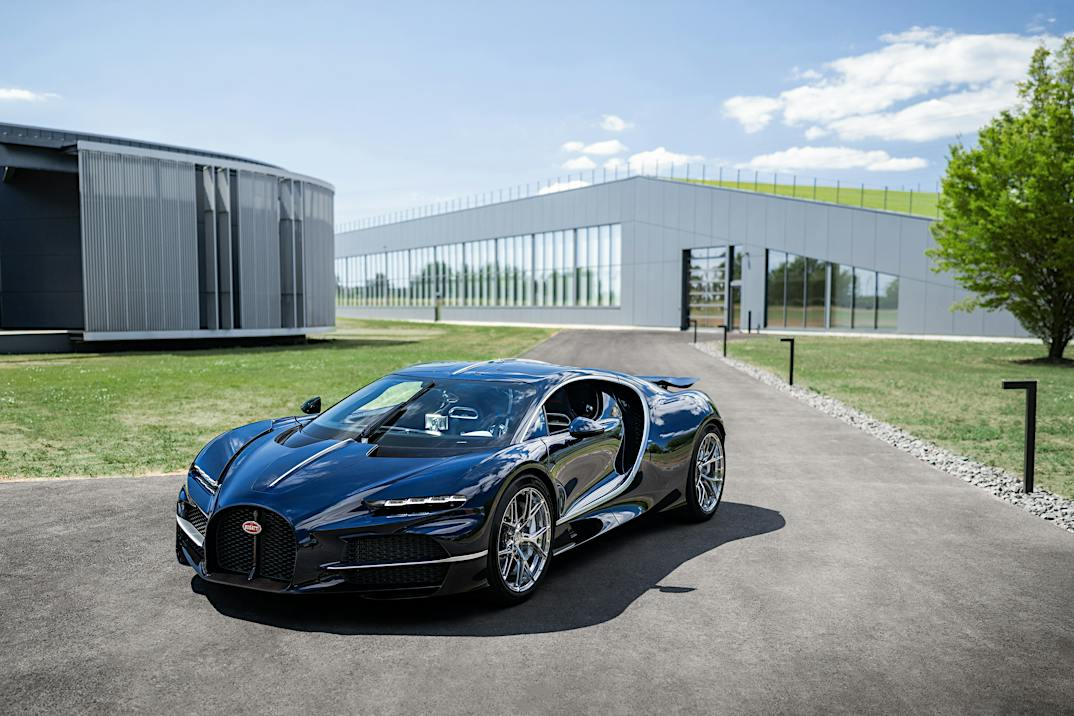
Porsche is officially stepping back from its role in Bugatti Rimac, handing its shareholdings in Rimac Group and Bugatti Rimac to a consortium led by HOF Capital. And while that might sound like the sort of corporate reshuffling that requires three lawyers, a spreadsheet and a strong coffee, the result is actually pretty straightforward: Mate Rimac is getting more room to run the show.
Porsche and Rimac Group created Bugatti Rimac as a joint venture in 2021. Rimac Group held a 55% majority stake, with Porsche owning the remaining 45%. Porsche also held a 21% stake in Rimac Group itself.
That arrangement is now changing.
The transaction, first announced in April 2026, has been completed, with HOF Capital leading a consortium that includes BlueFive Capital as its largest investor, along with other institutional investors from the US and Europe. Porsche’s holdings in both Rimac Group and Bugatti Rimac are now part of the consortium’s portfolio.
For Bugatti, the change comes at an interesting time. Mate Rimac, who has served as CEO of Bugatti Rimac since 2021, is moving into an even more prominent role in shaping the future of the French hypercar marque.
“I am really happy that the deal with Porsche and HOF Capital has been completed,” Rimac said, praising Porsche for helping establish the foundations of the brand’s current direction.
The new ownership structure also comes with some executive changes. Christophe Piochon will step down as President of Bugatti Automobiles and as Chief Operating Officer of Bugatti Rimac. Rimac will assume the presidency of Bugatti Automobiles himself.
Marko Brkljačić, formerly Chief Operating Officer at Rimac Technology, is planned to join the Bugatti Rimac leadership team as COO. Hendrik Malinowski, currently Managing Director of Bugatti Automobiles, is also expected to become the brand’s Chief Commercial Officer.
That’s a fair amount of executive musical chairs, but the timing is significant.
Bugatti is entering one of the most important periods in its modern history. The new La Manufacture production facility in Molsheim opened in July, while the Tourbillon is entering the final stages of its testing program.
The Tourbillon is particularly important because it represents Bugatti’s future under Rimac’s leadership. Rather than simply electrifying the Chiron formula, Bugatti developed a new hybrid powertrain combining a naturally aspirated V16 engine with electric motors. It is an appropriately excessive solution for a company whose idea of “reasonable transportation” has historically involved four-digit horsepower figures.
The ownership change doesn’t mean Bugatti is suddenly becoming a Rimac-branded electric-car company, either. Instead, the stated strategy remains focused on preserving Bugatti’s identity while using Rimac’s technology and engineering expertise to move the brand forward.
Rimac says the new structure supports a ten-year vision for Bugatti that began taking shape when Mate Rimac became CEO in 2021.
For Porsche, meanwhile, the completed transaction represents a significant change from its previous relationship with Rimac. Porsche was instrumental in the creation and development of the Bugatti Rimac joint venture, but it is now handing its interests to new investors.
For Bugatti, the bigger story is what happens next.
The Tourbillon is nearing production, a new facility is in operation, and Mate Rimac now has an even more direct hand in steering Bugatti’s future. After years of figuring out how to combine an old-world hypercar manufacturer with a modern electric-performance technology company, the next decade will show whether that formula can produce something more valuable than simply very fast cars.
Knowing Bugatti, however, “very fast” is probably the least interesting part.
