

The Honda Civic Type R has always been something of an automotive contradiction. It is a 315-horsepower front-wheel-drive hatchback with a six-speed manual transmission, enormous brakes, aggressive aerodynamics and a giant wing hanging off the back. Yet it is also a Civic, which means Honda expects you to drive it to work, go grocery shopping with it and, presumably, sit in traffic behind somebody doing 12 mph under the speed limit.
For 2027, Honda has given the Civic Type R a round of updates aimed at making that contradiction work even better.
The refreshed Type R gets revised aerodynamics, improved cooling, suspension changes, quicker rev matching, a more direct brake pedal and—finally—heated front seats. Because apparently the world’s most serious Civic needed to be reminded that sometimes performance driving involves temperatures below 70 degrees.
The updated 2027 Honda Civic Type R arrives at dealerships this month with an MSRP of $48,695, or $49,990 including Honda’s $1,295 destination charge. EPA fuel economy is rated at 22 mpg city, 28 mpg highway and 24 mpg combined.
More Air, More Downforce, More Type R
The biggest changes for 2027 are found at the front of the car.
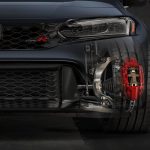
Honda redesigned the Civic Type R’s front fascia with a larger grille opening and a deeper front splitter. The changes aren’t merely there to give the Civic an even more aggressive expression. Honda says the revised design reduces airflow turbulence while increasing airflow velocity, improving engine cooling during hard driving.
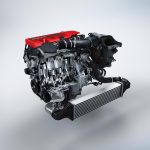
That’s important because the Type R’s turbocharged 2.0-liter K20C four-cylinder continues to produce 315 horsepower and 310 lb-ft of torque. Honda calls it the most powerful production Honda ever sold in the United States.
The deeper splitter also increases downforce, giving the front axle more authority when the driver is doing things that would make a normal Civic owner question their life choices.
Underneath, Honda has optimized the adaptive suspension’s damping calibration in the car’s +R driving mode. The goal is improved road following, less bouncing and reduced impact harshness while cornering.
In other words, Honda has tried to make the Type R more useful when the pavement gets serious without turning it into a kidney-stone generator.
The Manual Transmission Lives
Perhaps the most important Type R feature hasn’t changed at all: There is still a six-speed manual transmission.
The Civic Type R remains the only car in its class available exclusively with a manual transmission, according to Honda. The 2.0-liter turbocharged engine continues to send its output through a front-wheel-drive layout with a limited-slip differential.
For enthusiasts, that matters.
The automotive industry has spent the last decade making performance cars faster by adding automatic transmissions, all-wheel drive, computers and increasingly complicated launch-control algorithms. The Type R remains refreshingly committed to the idea that the person driving the car should actually have something to do.
Honda did, however, tweak the Rev Match system for 2027. Engine response during downshifts is quicker, which should make heel-toe-style driving and aggressive shifting feel more immediate.
The brake pedal also gets a new yoke spring designed to reduce play in the linkage and provide a more direct pedal feel.
These aren’t headline-grabbing horsepower upgrades, but they’re the sort of changes that matter in a performance car. The Type R doesn’t really need another 10 horsepower. It needs to communicate better with its driver.
Honda appears to understand that.
The Type R Gets Comfortable
And then there are the heated seats.
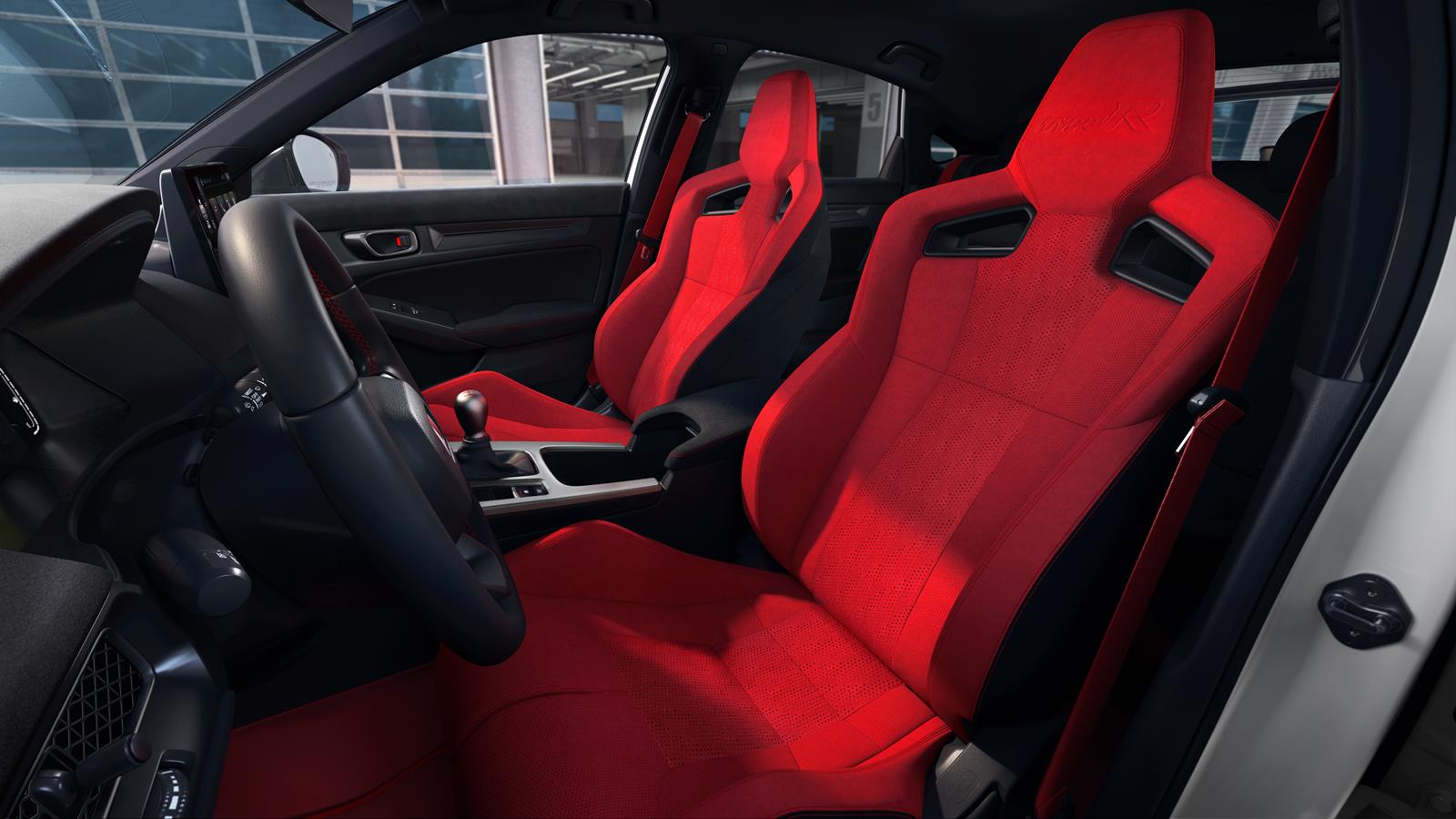
Yes, the Civic Type R’s heavily bolstered front seats are heated for 2027. This is the first time Honda has offered heated front seats in the current-generation Type R. Both front occupants get three levels of heating.
This might seem like a strange feature to emphasize on a car built around track performance, but it’s actually one of the more sensible updates.
A car can be extraordinarily capable on a racetrack and still spend most of its life commuting. Unless your commute happens to involve a racetrack, comfort matters.
Honda also redesigned the perforation pattern in the red suede-like front seat upholstery. The new pattern is intended to reduce body movement during high-G cornering while improving breathability in high-contact areas.
The cabin gets more premium Ultrasuede on the instrument panel and upper front door panels. Honda says the material also helps reduce glare and reflections in the windshield.
The dashboard gets diamond-pattern mesh trim, while several interior pieces receive darker finishes. The aluminum shift knob, console trim and door handles are now darker gray, while the climate-control and air-vent knobs go black.
There’s even a new auto-dimming rearview mirror.
So, essentially, Honda has taken a car that already looked like it wanted to eat a racetrack and given it a slightly nicer living room.
Google Moves Into the Type R
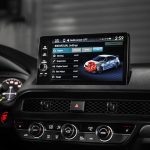
The 2027 Type R also gets a significant technology upgrade. Google built-in arrives for the first time, bringing Google Maps, Google Play and Google Gemini to the Civic Type R. Honda also adds Alexa built-in.
Gemini replaces Google Assistant within the system and can maintain conversational context across multiple interactions, allowing drivers to interact with the system without constantly repeating themselves.
There are also two additional USB-C ports in the center console, located above the standard wireless smartphone charger.
Because even people who insist on rowing their own gears need somewhere to plug in their phone.
Safety Gets Smarter, Too
The Type R already comes with the company’s Honda Sensing suite as standard. For 2027, several systems receive updates.
Collision Mitigation Braking with pedestrian detection gains increased visibility of motorcycles and bicycles. Adaptive cruise control gets revised braking and acceleration responses, while lane-keeping assist is tuned to better deal with road camber and other disturbances.
The big addition is Post-Collision Braking, which becomes standard on every 2027 Civic Type R. The system is designed to help reduce damage in situations involving multiple collisions.
The rest of the standard Honda Sensing equipment includes forward collision warning, road departure mitigation, lane departure warning, blind-spot monitoring, cross-traffic monitoring, driver attention monitoring, traffic sign recognition and automatic high beams.
None of that changes the fundamental nature of the Type R. The driver is still responsible for driving the thing. Honda simply gives the car more electronic backup for those moments when other drivers do something spectacularly stupid.
A New Color for the 30th Anniversary
The 2027 model year also marks 30 years since the Civic Type R first appeared in Japan and 10 years since the Type R arrived in North America.
To celebrate, Honda adds Meteorite Gray Metallic to the color palette. It joins Boost Blue Pearl, Sonic Gray Pearl and the traditional Championship White.
The engine cover has also been redesigned with styling that recalls early Type R engines sold in Japan.
Still 315 Horsepower. Still Six Speeds. Still Weirdly Serious.
The 2027 Honda Civic Type R isn’t a major mechanical overhaul. Honda didn’t bolt on another turbocharger, add electric motors or suddenly decide the car needed all-wheel drive.
Instead, the company concentrated on the things that already made the Type R interesting: cooling, aerodynamics, suspension tuning, steering and pedal feel.
Then it added some things that make living with the car easier, including heated seats, better cabin materials, additional connectivity and improved safety technology.
That’s probably the right approach.
The Civic Type R doesn’t need to become something different. Its appeal comes from being an increasingly rare kind of performance car: one that still expects the driver to participate.
You get 315 horsepower, a six-speed manual, front-wheel drive, a limited-slip differential and a chassis designed to make corners considerably more entertaining than they have any legal right to be.
Now you can do all of that while keeping your backside warm.














Progress, apparently, has finally arrived.
