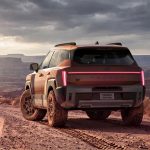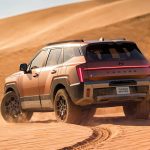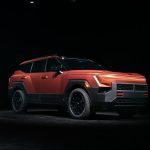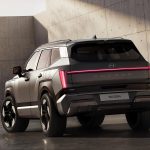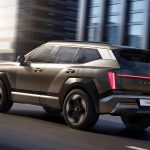

Hyundai has pulled the covers off the all-new Tucson, and apparently the company has decided that its best-selling SUV needed to be just about everything to just about everybody.
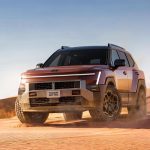
The new Tucson gets a more muscular design, a redesigned interior, Hyundai’s next-generation hybrid system, a new infotainment platform with AI, and—because apparently a compact crossover isn’t adventurous enough anymore—a new Tucson XRT PRO aimed at buyers who actually intend to leave the pavement.
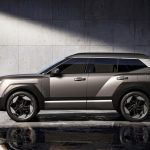
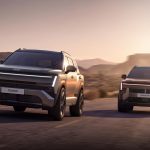
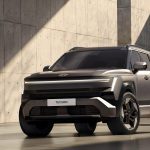
Hyundai calls the design philosophy “Art of Steel.” That sounds considerably more dramatic than “we made the fenders bigger,” but there is some substance behind the marketing speak. The new Tucson is longer, wider and taller than the outgoing model, with the long-wheelbase version measuring 4,700 mm long, 1,905 mm wide and 1,685 mm tall.
That translates to a vehicle that should have more road presence and, presumably, more room inside.
The Tucson Gets Seriously Muscular
The new design emphasizes pronounced fenders, restrained door surfaces and crisp body lines. Hyundai says the styling is intended to communicate the inherent strength of steel, which is a fairly elaborate way of saying that the Tucson no longer looks like it is trying to apologize for being an SUV.
New exterior colors include Ranger Green Pearl/Matte, Kodiak Blue Pearl, Driftwood Gray Metallic/Matte and Red Rock Orange Pearl/Matte.
Lighting gets a substantial makeover, too. The front end uses Hyundai’s new H-Edge lighting signature, while the rear gets Prism Rear Lamps. Available Micro Pixel Lighting uses 25,600 individual LED pixels for various beam patterns and animated lighting effects.
Because apparently headlights are no longer satisfied with simply illuminating the road.
Inside, Hyundai Wants You to Relax
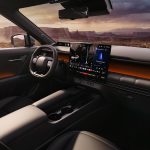
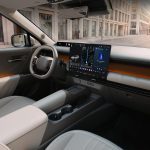
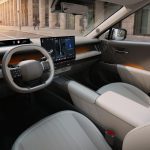
Hyundai has gone after cabin comfort with what it calls a “furnished space” philosophy. The dashboard uses a two-layer design, with a horizontal upper section and an open storage area underneath.
The company also appears to have resisted the industry’s increasingly enthusiastic attempt to turn every vehicle function into a touchscreen menu.
Frequently used functions such as climate and audio controls get tactile buttons, while the 9.9-inch display above the steering column is positioned to keep important information in the driver’s line of sight.
Depending on configuration, the Tucson can also get dual 15-watt wireless charging pads, three-zone climate control and an Ergo Motion Seat with pneumatic lumbar and bolster massage functions.
There is even an available Relaxation Comfort Seat that can recline by 10 degrees at the push of a button.
That’s probably useful when you’re parked. Doing it while driving would make for a particularly interesting interpretation of “relaxation.”
The Tucson also gets a new shift-by-wire gear selector mounted on the steering column, freeing up additional space around the center console.
Hybrid Power Gets a Bigger Role
Hyundai is putting considerable emphasis on the Tucson’s new-generation hybrid system.
The company is targeting up to 42 mpg for the hybrid, along with a 0-to-60-mph time of 8.5 seconds. That’s a useful combination for an SUV that is expected to spend most of its life commuting rather than climbing mountains.
The hybrid also gets Hyundai’s E-Traction system, which can adjust driving torque to help reduce wheel slip during cornering.
Another interesting feature is HEV Stay Mode. It allows systems such as the air conditioning, heating, audio and device charging to operate with the gasoline engine switched off. Hyundai describes the result as an EV-like experience while parked.
The conventional Tucson will use a 1.6-liter turbocharged engine producing 184 horsepower and 27.0 kgf·m of torque, paired with an eight-speed automatic transmission.
There’s also a plug-in hybrid. It combines a 1.6-liter turbocharged engine with an electric powertrain to produce 292 PS and 38.7 kgf·m of torque. Hyundai quotes an estimated 81 km of electric range—about 50 miles—before the gasoline engine takes over.
For North American buyers, the hybrid also gets a substantially higher towing rating of 3,000 pounds, up 1,000 pounds from the previous model.
That’s enough for considerably more than a couple of bicycles and a cooler.
Meet the AI-Powered Tucson
Hyundai is also bringing its Pleos Connect infotainment system to the Tucson.
The Android Automotive OS-based system uses either a 17-inch or 12.9-inch primary touchscreen, along with a 9.9-inch slim display. It supports over-the-air updates and integrates third-party entertainment, productivity and gaming services.
The more interesting part is Gleo AI.
Hyundai describes Gleo as an in-vehicle agentic AI capable of understanding conversational requests and context. Rather than hunting through menus, drivers can ask the system for something like a hiking trailhead with parking within 30 minutes.
Assuming the AI doesn’t decide that what you really need is a podcast about hiking, followed by a recommendation for a Korean barbecue restaurant 47 miles away, this could be considerably more useful than simply adding another layer of menus.
Tucson XRT PRO: Because Dirt Exists
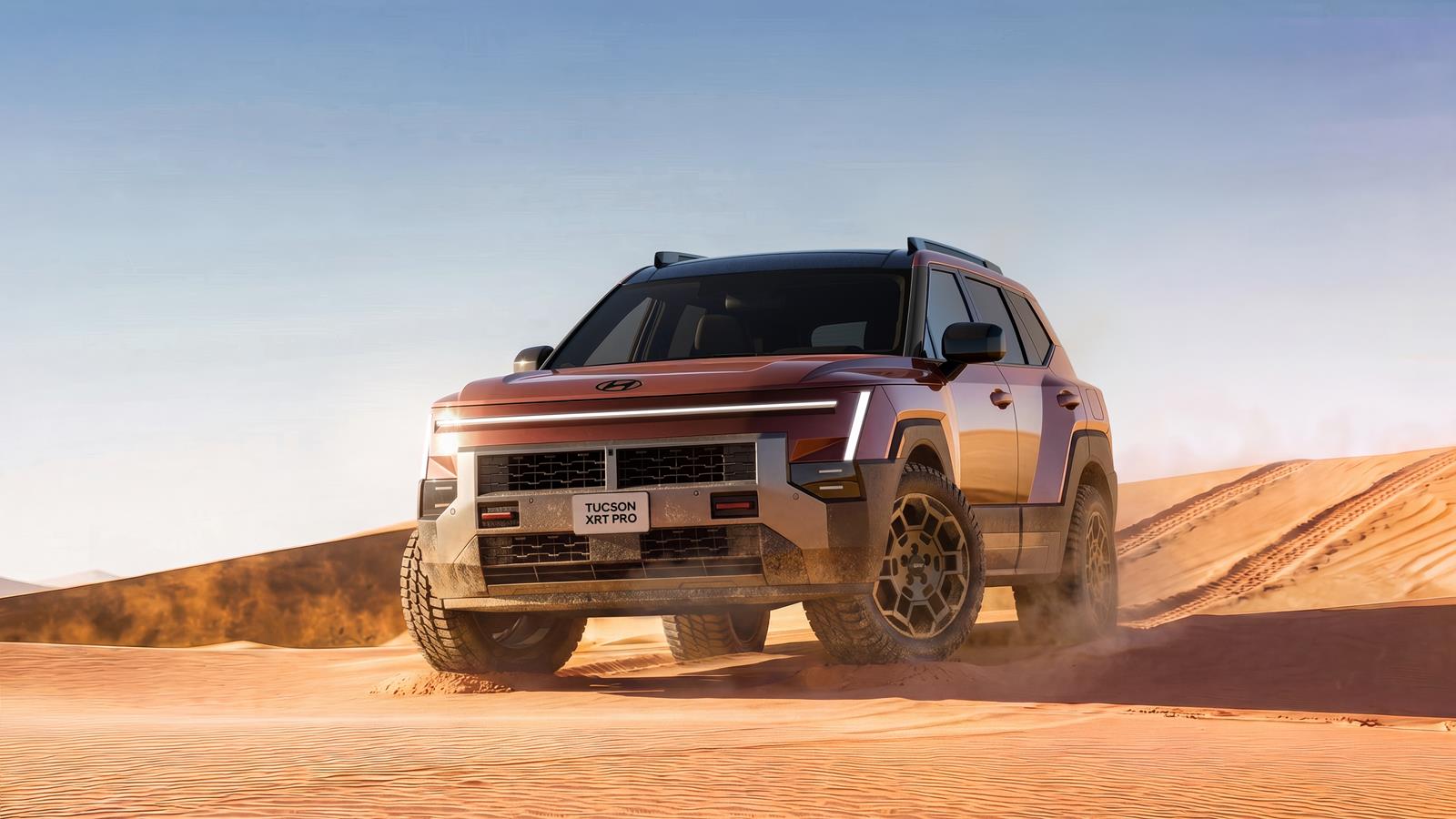
For buyers who think “crossover” should not automatically mean “never leave the asphalt,” Hyundai has introduced the Tucson XRT PRO.
The XRT PRO gets all-wheel drive, all-terrain tires, front recovery hooks, more aggressive approach and departure angles and increased ground clearance.
Ground clearance rises to 210 mm, or about 8.3 inches, which is 30 mm more than the standard Tucson.
The XRT PRO also gets additional lower-body protection and rugged exterior cladding.
Hyundai is adding some genuinely useful technology for off-road driving, too. Smart Terrain Assist analyzes traction and wheel-slip conditions and provides the driver with a visual “stuck score” using green, orange and red indicators.
Target Speed Control can manage acceleration and braking at speeds between 2 and 25 km/h, allowing the driver to concentrate more on steering while the Tucson handles power delivery.
There is also a Ground View Monitor and Memory Reversing Assist, which can record driving at speeds up to 30 km/h and assist steering while reversing along narrow roads.
And for those who have ever attempted to back a trailer into a campsite while questioning every life decision that led to that moment, Trailer Reverse Assist can help manage steering alignment.
Safety Tech Gets Smarter, Too
The new Tucson incorporates a long list of driver-assistance and occupant-monitoring technologies.
An in-cabin monitoring system watches driver eye activity and drowsiness, while Child Presence Detection and Rear Occupant Alert are designed to notify the driver if children or pets are left unattended.
Intelligent Speed Limit Assist recognizes speed-limit signs, while Navigation-Linked Smart Cruise Control can adjust vehicle speed for upcoming curves, intersections, roundabouts and speed bumps based on navigation information.
Hyundai also says the new Tucson uses extensive hot-stamped steel and reinforced structural components to improve impact resistance and body rigidity.
The Tucson’s Next Chapter Starts in 2027
The Tucson has been a major part of Hyundai’s global lineup since its introduction in 2004. Hyundai says cumulative global Tucson sales have now surpassed 11.1 million units, making it the company’s best-selling SUV worldwide.
The United States represents about 20 percent of those cumulative sales, and hybrids accounted for 31 percent of U.S. Tucson sales in 2025.
That explains why Hyundai is leaning so heavily into electrification with the new generation.
The new Tucson will launch in Korea later this year, followed by North America, Europe and other global markets in 2027.
So the next Tucson isn’t simply getting a styling update and a bigger touchscreen. Hyundai is trying to turn its compact SUV into a more capable, more electrified and more technologically sophisticated machine—while simultaneously making sure it remains useful as the family appliance it has become.
That’s a fairly ambitious assignment for one vehicle.
Then again, if Hyundai gets it right, the Tucson may not need to choose between being the sensible daily driver and the vehicle you point toward the mountains on Friday afternoon.
It can apparently try to be both.