

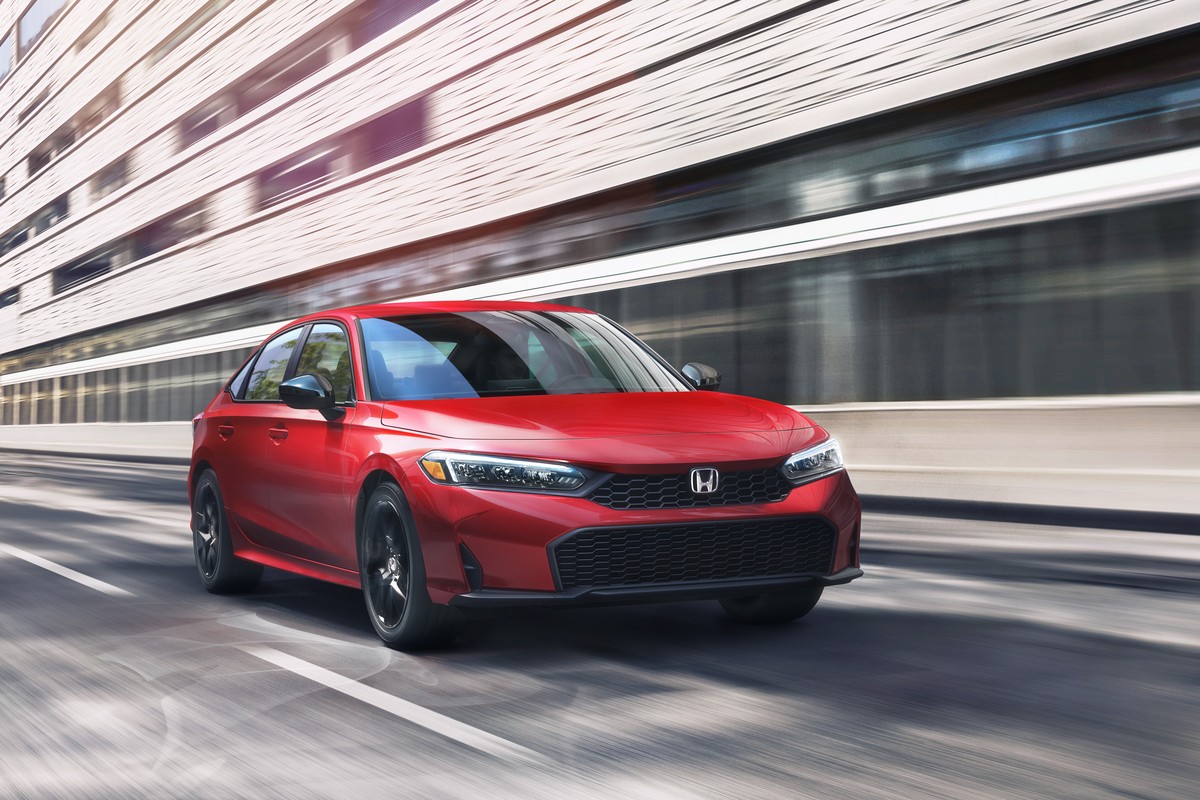
Honda is giving Civic buyers another reason to look beyond the base trim for 2027. The automaker is introducing a new Sport-L model for both the Civic Sedan and Hatchback, adding a collection of comfort and convenience features previously associated with the more expensive hybrid models.
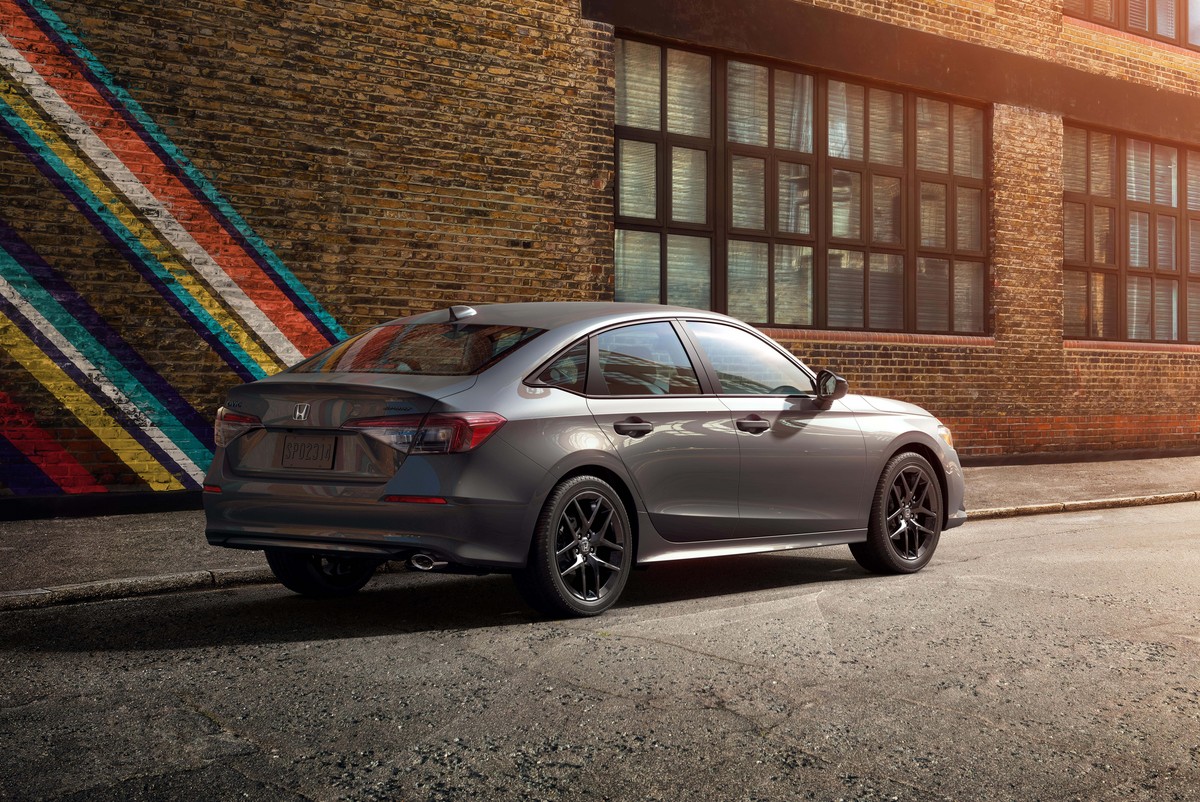
The new 2027 Honda Civic Sport-L starts at $28,495 for the sedan and $29,695 for the hatchback. Both versions are beginning to arrive at Honda dealerships, positioning the Sport-L between the existing Sport and Sport Hybrid models.
The idea is straightforward: give buyers some of the nicer features found in higher-end Civics without requiring them to pay for hybrid powertrain technology they might not want or need.
More Comfort, Less Compromise
The biggest selling point of the new Sport-L is its expanded interior equipment. Honda includes leather seating surfaces, heated front seats, an eight-way power-adjustable driver’s seat and a four-way power-adjustable front passenger seat.
Dual-zone automatic climate control also comes standard, along with leather-trimmed center armrests, door panels and armrests. Other additions include illuminated front vanity mirrors, a front passenger seatback pocket, silver mesh instrument-panel trim and silver gauge accents.
These additions give the Sport-L a more upscale feel than the standard Civic Sport. Heated seats and power-adjustable seating are particularly welcome additions for buyers who spend considerable time commuting.
The equipment package also addresses one of the traditional compromises of buying an entry-level compact car: getting the fuel economy and practicality without necessarily having to settle for a relatively basic interior.
Conventional Power, Familiar Efficiency
Unlike the Civic Sport Hybrid, the Sport-L sticks with conventional gasoline power.
Under the hood is Honda’s naturally aspirated 2.0-liter four-cylinder engine paired with a continuously variable transmission (CVT). Honda has not announced any mechanical performance upgrades for the Sport-L, meaning buyers are getting essentially the same conventional powertrain configuration found in the regular Sport.
EPA fuel economy ratings are 31 mpg city, 39 mpg highway and 34 mpg combined for the sedan. The hatchback is rated at 30 mpg city, 38 mpg highway and 34 mpg combined.
Those numbers are respectable for a conventional gasoline compact, particularly when compared with the hybrid models’ higher purchase prices.
The Civic Sport Hybrid, by comparison, delivers 50 mpg city, 47 mpg highway and 49 mpg combined in sedan form. The hatchback achieves 50 mpg city, 44 mpg highway and 47 mpg combined.
That makes the hybrid a compelling alternative for drivers who prioritize fuel economy, but the Sport-L provides a different value proposition by emphasizing comfort and equipment.
Pricing and Positioning
The 2027 Civic Sport-L sedan starts at $28,495 MSRP, while the hatchback starts at $29,695.
For comparison, the conventional Civic Sport sedan starts at $26,995, and the Sport Hybrid sedan begins at $29,695. The hatchback Sport starts at $28,195, with the Sport Hybrid starting at $30,895.
In other words, the Sport-L sedan costs $1,500 more than the conventional Sport but $1,200 less than the Sport Hybrid. The hatchback follows the same general strategy, costing $1,500 more than the Sport and $1,200 less than the Sport Hybrid.
Honda’s Total Suggested Retail Price (TSRP), which includes the $1,295 destination charge, is $29,790 for the Sport-L sedan and $30,990 for the hatchback. Taxes, registration, dealer-installed accessories and applicable premium paint charges are additional.
The pricing makes the Sport-L an interesting middle ground. Buyers get a substantially upgraded interior without having to step into the hybrid powertrain’s higher equipment and technology package.
Safety Remains Standard
As with the rest of the 2027 Civic lineup, the Sport-L includes Honda Sensing, the automaker’s collection of driver-assistance and safety technologies.
Standard equipment includes Collision Mitigation Braking System with Pedestrian Detection, Adaptive Cruise Control, Lane Keeping Assist, Forward Collision Warning and Road Departure Mitigation with Lane Departure Warning.
The Sport-L also includes a blind spot information system with Rear Cross Traffic Alert.
These technologies are increasingly expected in modern compact cars, but their inclusion remains an important part of the Civic’s value proposition.
Another Civic for a Crowded Market
The Civic has been a fixture of the compact-car market for decades. Honda points to more than 13 million Civics sold in the United States and its position as America’s best-selling compact car since 1973.
The Sport-L is an incremental addition rather than a major reinvention. Honda isn’t changing the Civic’s basic formula, introducing a new engine or attempting to turn its compact car into a luxury vehicle.
Instead, it’s addressing a fairly straightforward customer desire: more comfort and convenience without a substantial jump in price.
That strategy makes sense. Not every Civic buyer wants a hybrid, and not everyone needs the additional fuel economy enough to justify spending more. But plenty of buyers would appreciate heated leather seats, power-adjustable seating and dual-zone climate control.
The 2027 Civic Sport-L gives those customers another option, and potentially a more appealing one than simply moving up to a hybrid model.
For Honda, it’s a relatively simple way to broaden the Civic’s appeal. For buyers, it’s another reminder that getting a nicer compact car doesn’t necessarily mean buying a more complicated one.
