

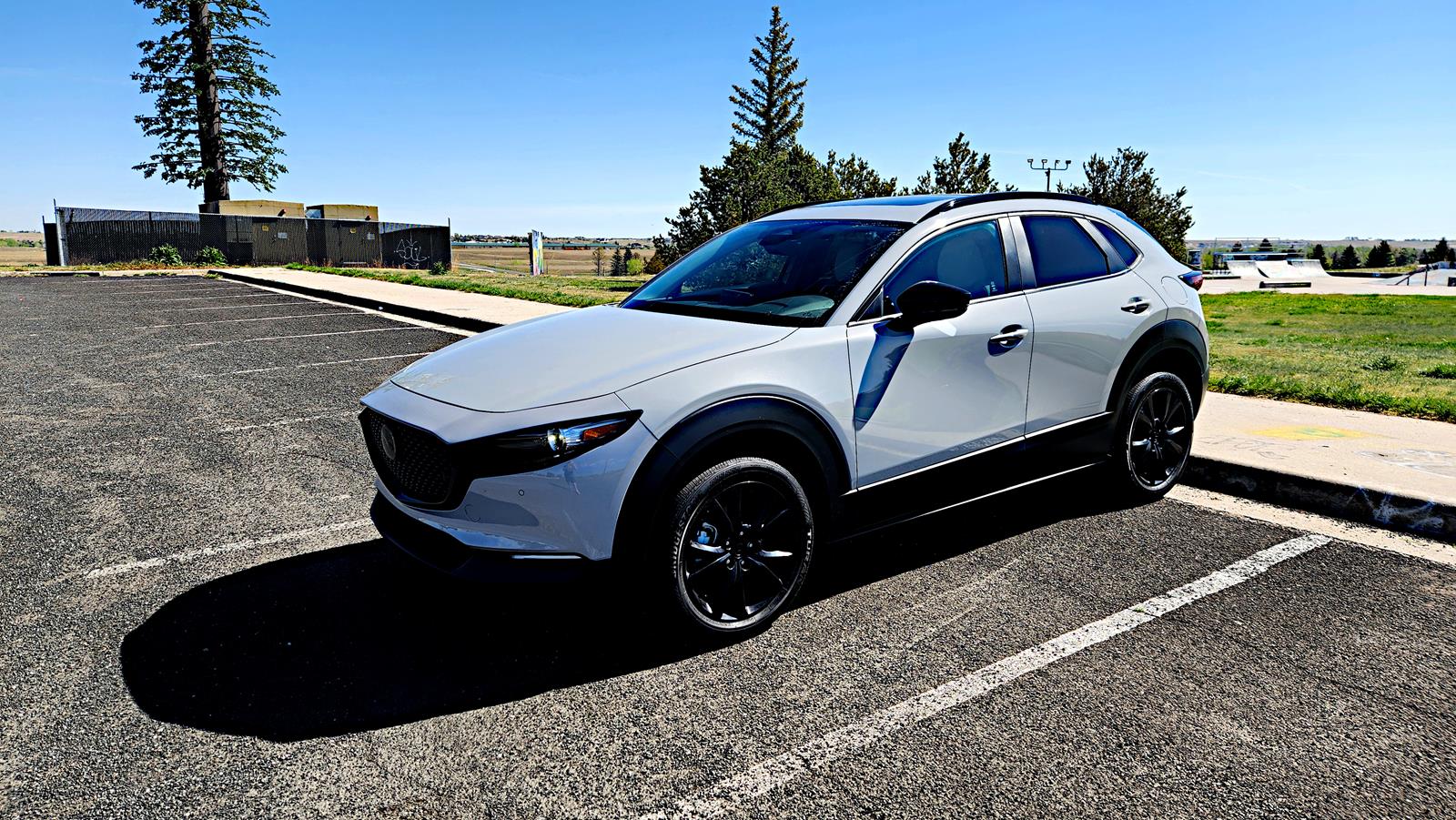
There are a lot of subcompact crossovers on sale today, and most of them have the personality of a beige office cubicle. They’re appliances. Transportation devices and nothing more. That’s not a bad thing for some drivers, but for others, there’s the 2026 Mazda CX-30.
Mazda has spent the better part of a decade refusing to follow the industry’s playbook. While competitors chase giant touchscreens, gimmicky styling, and ever-more-complicated powertrains, Mazda continues building vehicles for people who actually enjoy driving. The CX-30 is perhaps the purest expression of that philosophy.
For 2026, Mazda gives the CX-30 a modest refresh rather than a complete overhaul. Revised dampers, a brake-actuated limited-slip differential, expanded availability of the larger touchscreen, and new trim options headline the changes. It’s not revolutionary, but it doesn’t need to be. The CX-30 was already one of the best-driving vehicles in its class.
Same Shape, Still Looks Better Than Most Everything Else
The CX-30 continues to be one of the best-looking small crossovers on the market.
Mazda’s Kodo design language has aged remarkably well. While many competitors have become increasingly busy with fake vents, oversized grilles, and high-fold bodywork, the CX-30 remains clean and elegant. The long hood, swept roofline, and muscular fenders give it proportions that look dynamic.
The downside, of course, is that good design comes with compromises.
That sleek roofline cuts into rear-seat headroom and cargo space. Buyers cross-shopping practical choices like the Honda HR-V or Subaru Crosstrek will find more room in the back. The CX-30 makes a conscious decision to prioritize style and driving dynamics over maximum utility. Whether that’s a problem depends on what you need from your crossover.
An Interior That Embarrasses Luxury Trends
Open the door and the CX-30’s biggest advantage becomes immediately obvious. Nobody at this price point does interiors quite like Mazda.
The dashboard design is clean and uncluttered. Materials look and feel premium. Switchgear operates with satisfying precision. Even after six years on the market, the CX-30’s cabin feels more expensive than many vehicles costing $10,000 more.
That’s become Mazda’s signature trick.
The company has essentially built a premium-level vehicle while charging mainstream prices. Competitors often respond by adding more screens or colorful ambient lighting. Mazda simply builds a nicer cabin.
For 2026, the larger 10.25-inch touchscreen becomes available on more trims, addressing one of the few complaints buyers had about lower-spec models. Wireless Apple CarPlay and Android Auto are increasingly common throughout the lineup as well.
The seats remain among the best in the segment, providing excellent long-distance comfort and support. Rear passengers, however, may not be as enthusiastic. Legroom and headroom remain tighter than many rivals, a recurring criticism of the CX-30 since its launch.
Driving Matters Here
This is where the CX-30 separates itself from nearly every competitor. Most subcompact crossovers are engineered to be invisible. They isolate the driver from the experience as much as possible. Steering is numb. Handling is forgettable. Driving becomes something that happens to you.
Mazda takes a different approach. Steering is sharp and communicative. The chassis feels planted and responsive. Body motions are controlled without becoming harsh. Even the naturally aspirated 2.5-liter engine provides a level of engagement that’s increasingly rare in the segment.
For 2026, Mazda adds revised suspension tuning and a brake-actuated limited-slip differential system designed to improve traction and stability. The changes aren’t dramatic, but they reinforce the CX-30’s reputation as the driver’s choice among small crossovers.
The standard engine is competent, producing enough power for daily driving without complaint. Those wanting more excitement should look at the turbocharged models. The turbo transforms the CX-30 from pleasantly engaging to genuinely quick. It won’t challenge performance SUVs costing twice as much, but it delivers the kind of effortless acceleration that makes highway merging and passing a non-event.
It should be noted that despite Mazda’s sporty reputation, the CX-30 isn’t quite the canyon-carving hot hatch some enthusiasts imagine. The handling is excellent for the class, but it’s still a crossover riding higher than a traditional car.
There are also signs that the CX-30 is aging. While the styling remains attractive, some competitors offer more modern packaging and greater practicality. Still, those drawbacks feel like deliberate tradeoffs rather than engineering failures.
The TLDR: Summing the CX-30 Up
The 2026 Mazda CX-30 continues doing exactly what it has always done: offering the most enjoyable driving experience in the subcompact crossover segment while wrapping it in a cabin that feels one class above its competitors.
It isn’t the roomiest choice. It isn’t the cheapest choice. It isn’t even the most technologically advanced choice. But it might be the one you’ll still enjoy driving after the novelty wears off.
In a segment filled with transportation appliances, the CX-30 remembers that automobiles are supposed to be enjoyable. That’s becoming a rare quality.
For buyers who value driving dynamics, premium feel, and attractive design over maximum cargo capacity, the 2026 CX-30 remains one of the easiest recommendations in the segment. Sometimes the best update is knowing when not to mess with a good thing.