

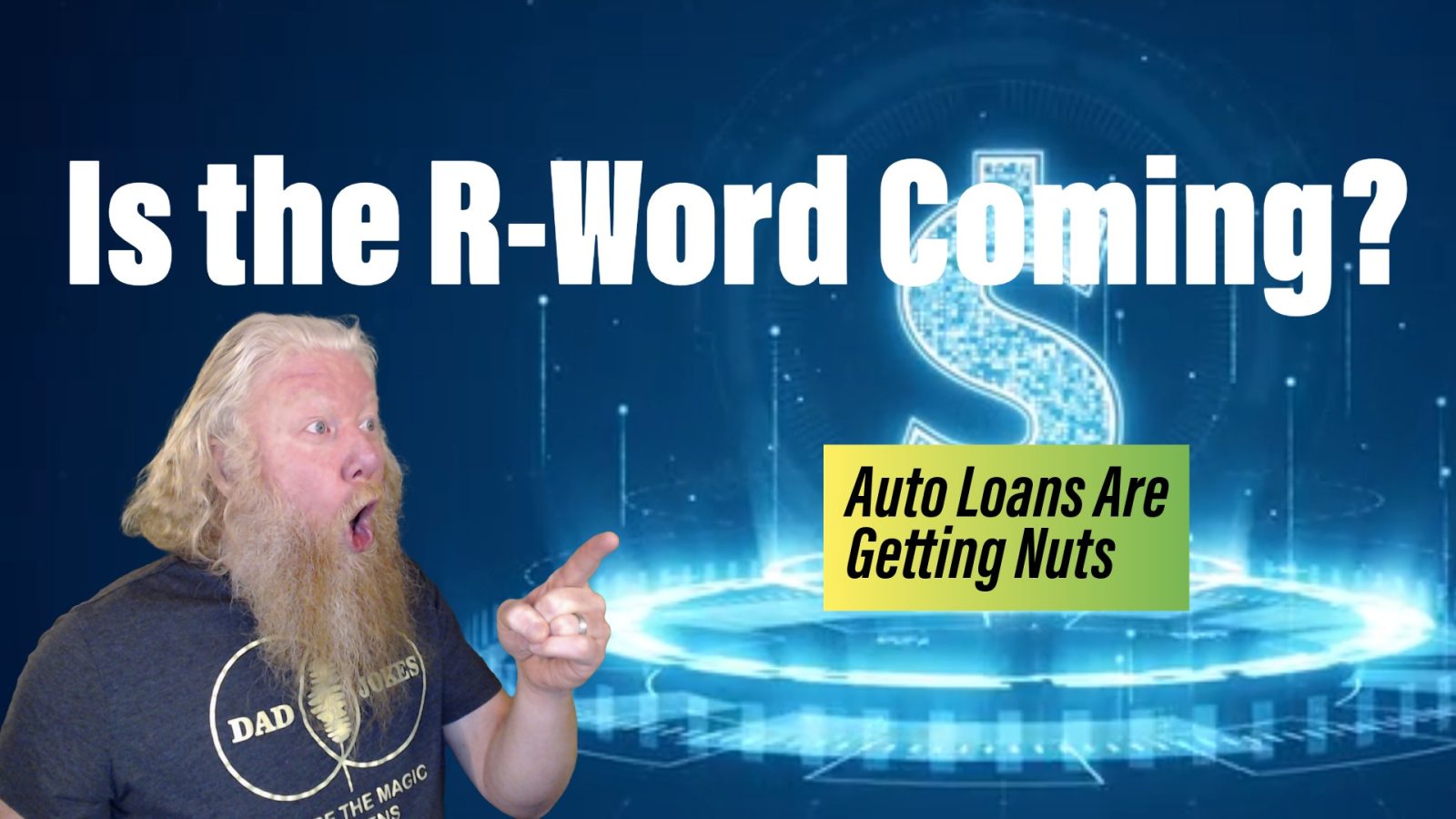
As of right now, auto loan balances are at about $1.7 trillion, the average new car purchase is about $51,000, and automotive loans are spreading past a 5-year average. These are all indications that the automotive market, and the market on the whole, is beginning to become untenable.
Many institutions are turning to 96-month (8 year) loans in order to get consumers qualified for the large purchase price and high interest rates we’re seeing today. Alongside those high interest rates and large, lengthy payments thanks to high purchase prices, we’re also beginning to see loan defaults grow. That’s usually the first warning sign. It’s happened before in loan-centric markets (think real estate) and it didn’t go well longer term.
I know I used the R word in the title, but I’m not going to repeat it here. It could be something that the market corrects on its own. For a clean correction, that would mean fewer people buy new cars, interest rates drop, and/or subprime lenders start reigning in their lending.
We’re seeing most of the late payments and defaults happening in the subprime sector, of course, because it’s always first. But, as the New Yorker pointed out, those lenders seem to be doubling down instead. And car repossessions are way up.
Part of the reason loan lengths are stretching (and have been for years) is due to the cost of a new vehicle. Inflation, tariffs, and more are all making cars more expensive on both the new and used markets. I’ve talked about that before. And anyone who understands simple finance knows that the longer the loan, the more interest that’s being paid. The more interest, the less affordable and the faster the vehicle goes underwater in what’s owed versus its value on the market. The more underwater, the worse it is for both the lender and the borrower.
As repos and defaults increase, a snowball effect begins. In our case, it’s already started. Still early, but it’s there. As that snowball of defaulted loans and the financial repercussions it will have on lenders and the economy at large gets bigger, so it will begin to effect the rest of us. And we all know from past R-words, when the “fixes” and “bailouts” come, it’s not everyday consumers that benefit.
What can we do to fix this? Honestly, I don’t know. I do know that it could correct if certain things happen, as I mentioned, but the likelihood of those things happening are pretty slim.
The economy, as inflation keeps compounding, isn’t good for most of us. This is just one sign of several that imply something might be coming. All I can do it point that out.
This article originally appeared on the Aaron On Autos Substack.
