
If the automotive world were a high school, the 2026 Nissan Pathfinder would be the kid who still carries a paper notebook while everyone else is trying to take notes on AI-powered smart glasses. It isn’t flashy. It doesn’t have a tiny turbocharged four-cylinder pretending to be a V8. It doesn’t promise to revolutionize transportation.
Instead, it quietly keeps doing what families actually need: hauling people, towing trailers, surviving road trips, and generally being dependable.
So while the Pathfinder evolved from the body-on-frame, truck-based SUV it was in the 1990s to the crossover-style, car-based SUV it is today, it did so for the right reasons. Practicality.
Familiar Looks, Updated Details
Park a 2025 and a 2026 Pathfinder next to each other and you’ll notice the changes.. eventually.
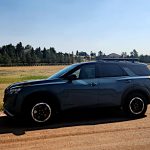
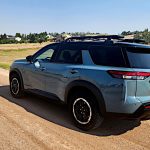
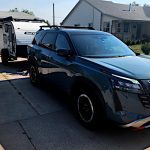
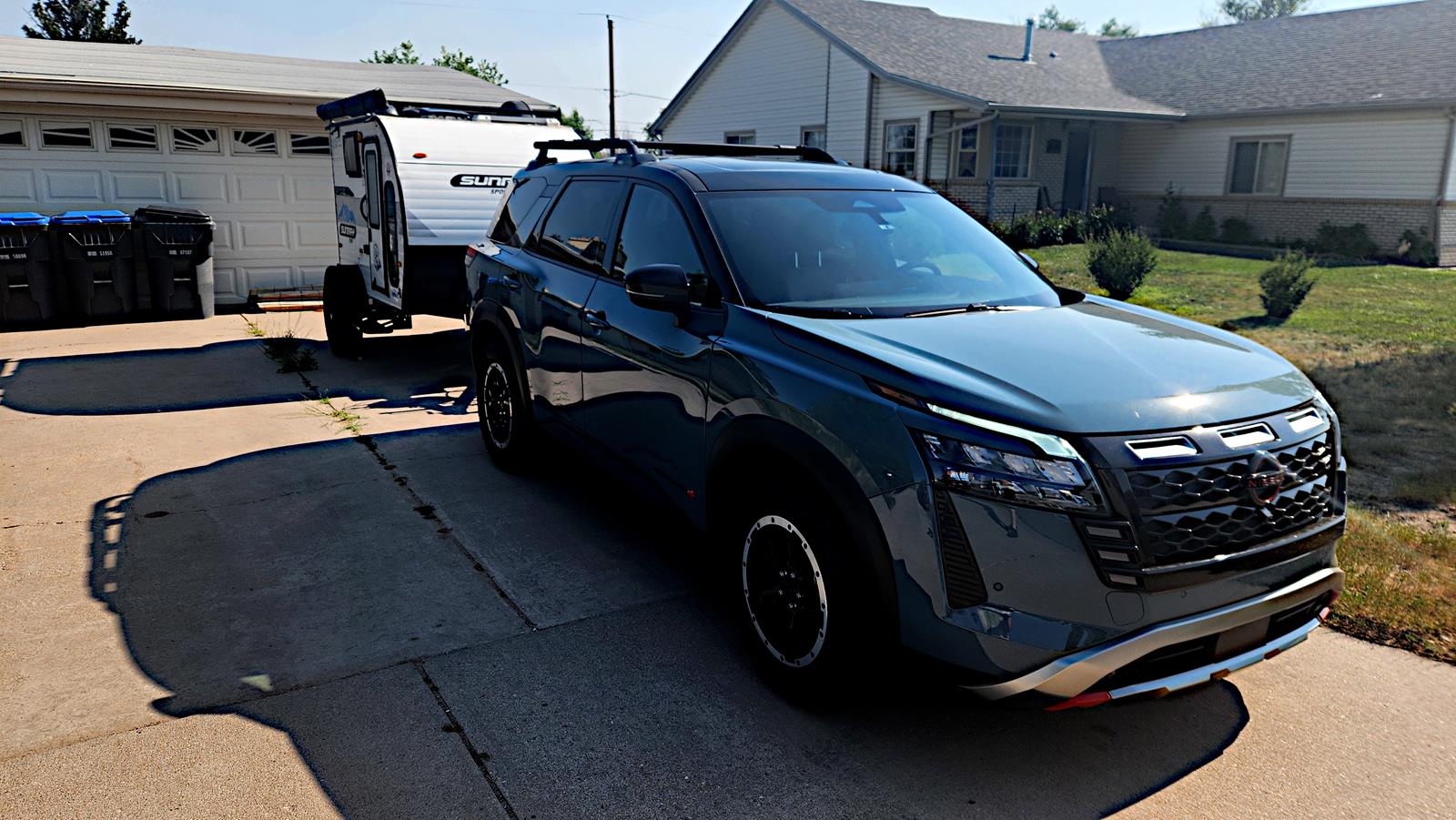
The grille is a little sharper, the bumpers have been cleaned up, there’s new lighting and revised trim, and Nissan added a few new wheel designs and paint choices. It’s enough to modernize the Pathfinder without making current owners feel like their vehicle instantly became obsolete. This is the fine line automakers walk when doing mid-cycle refreshes during a model’s generational run. Nissan did it right.
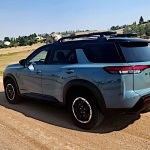
Rock Creek remains the outdoorsy member of the family with unique styling, a tougher suspension, all-terrain tires, and just enough rugged attitude to justify buying hiking boots you’ll wear twice a year. And maybe a kayak for the roof rack. With one of those water filter siphon thingees you’ll never actually use.
Finally, Technology That Doesn’t Feel Behind
The biggest improvements for the Pathfinder happen inside.
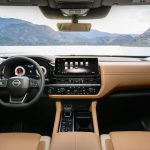
Every 2026 Pathfinder now gets a 12.3-inch touchscreen as standard equipment along with wireless Apple CarPlay and Android Auto. Nissan also upgraded the wireless charger and improved the available camera system with features like Invisible Hood View and Front Wide View for tighter trails or parking lots.
More importantly, Nissan resisted the temptation to eliminate physical controls.
Temperature adjustments shouldn’t require three touchscreen menus and an engineering degree. The Pathfinder still lets you reach over, twist a knob, and continue driving like civilized human beings have for decades now.
The cabin itself remains one of Nissan’s stronger efforts. Materials feel solid, assembly quality is good, and the Platinum trim adds nicer quilting and trim pieces without venturing into fake-luxury territory.
Three Rows That Actually Work
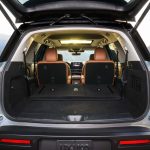
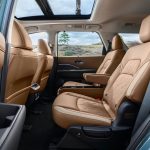
The Pathfinder’s biggest strength remains practicality. The second row slides and reclines, making third-row access relatively painless. Adults can survive short trips back there without needing a chiropractor afterwards. Kids will have plenty of room.
Cargo space isn’t class-leading, but it’s useful enough for family vacations, sports gear, grocery runs, and the inevitable warehouse-club shopping expedition where you somehow leave with 48 rolls of paper towels and a new TV.
Long Live the V6
Here’s where the Pathfinder quietly stands apart.
Under the hood sits a naturally aspirated 3.5-liter V6 producing 284 horsepower, or 295 horsepower in the Rock Creek. It’s paired with a nine-speed automatic transmission and available all-wheel drive. Yes, a geared transmission, not a CVT.
In an era where nearly every competitor has switched to turbocharged four-cylinders, Nissan stuck with displacement. That means throttle response feels immediate. There’s no waiting for boost, no tiny engine desperately inhaling through a turbocharger every time you merge onto the interstate.
But there’s a downside..
Fuel economy is merely average, and the V6 has to rev a bit when maximum acceleration is required. It’s competent rather than exciting. But really, that’s perfectly acceptable. Not every family SUV needs to pretend it’s a sports car. In fact, most of them don’t.
Surprisingly Capable
One place the Pathfinder punches above its weight is towing. Properly equipped, it can tow up to 6,000 pounds. That’s one of the best ratings in the midsize three-row crossover segment. That comfortably handles most boats, campers, utility trailers, and weekend toys. Even many RVs.
That’s a genuine advantage over many competitors that top out around 5,000 pounds. Most not even that high. For buyers who actually tow something more than a bicycle rack, that’s worth paying attention to.
On the Road
Driving the Pathfinder is pleasantly uneventful. Steering is light, visibility is excellent, and the ride leans toward comfort rather than excitement. Body roll exists because physics still applies, but it never feels sloppy.
Road noise remains well controlled except in the Rock Creek, whose all-terrain tires generate the expected soundtrack on pavement. That’s less a criticism than a reminder that aggressive tires are great off-road and mediocre everywhere else.
The Pathfinder isn’t trying to out-handle a Mazda CX-90. It’s trying to get three sleepy kids home after soccer practice without anyone spilling juice boxes. Mission accomplished.
Where It Falls Short
The Pathfinder isn’t perfect.
Some rivals offer richer interiors, more cargo room, stronger acceleration, or hybrid powertrains with significantly better fuel economy.
The Kia Telluride continues to feel more upscale.
The Honda Pilot has one of the best-balanced driving experiences in the class.
Toyota’s Grand Highlander offers excellent hybrid efficiency.
And if you prioritize technology above everything else, some competitors simply feel newer.
The Pathfinder also shows its age in a few places despite the refresh. This is fundamentally the same SUV introduced for the 2022 model year, and you can occasionally tell.
Rounding All This Up
For the 2026 Pathfinder, Nissan fixed one of the biggest complaints in the outdated infotainment system and then freshened the styling, added a few thoughtful features, and left the fundamentals alone.
That turns out to be a pretty sensible strategy.
The Pathfinder remains one of the few midsize family SUVs offering a naturally aspirated V6, genuine towing capability, comfortable road manners, and straightforward usability without trying to become a rolling technology experiment.