

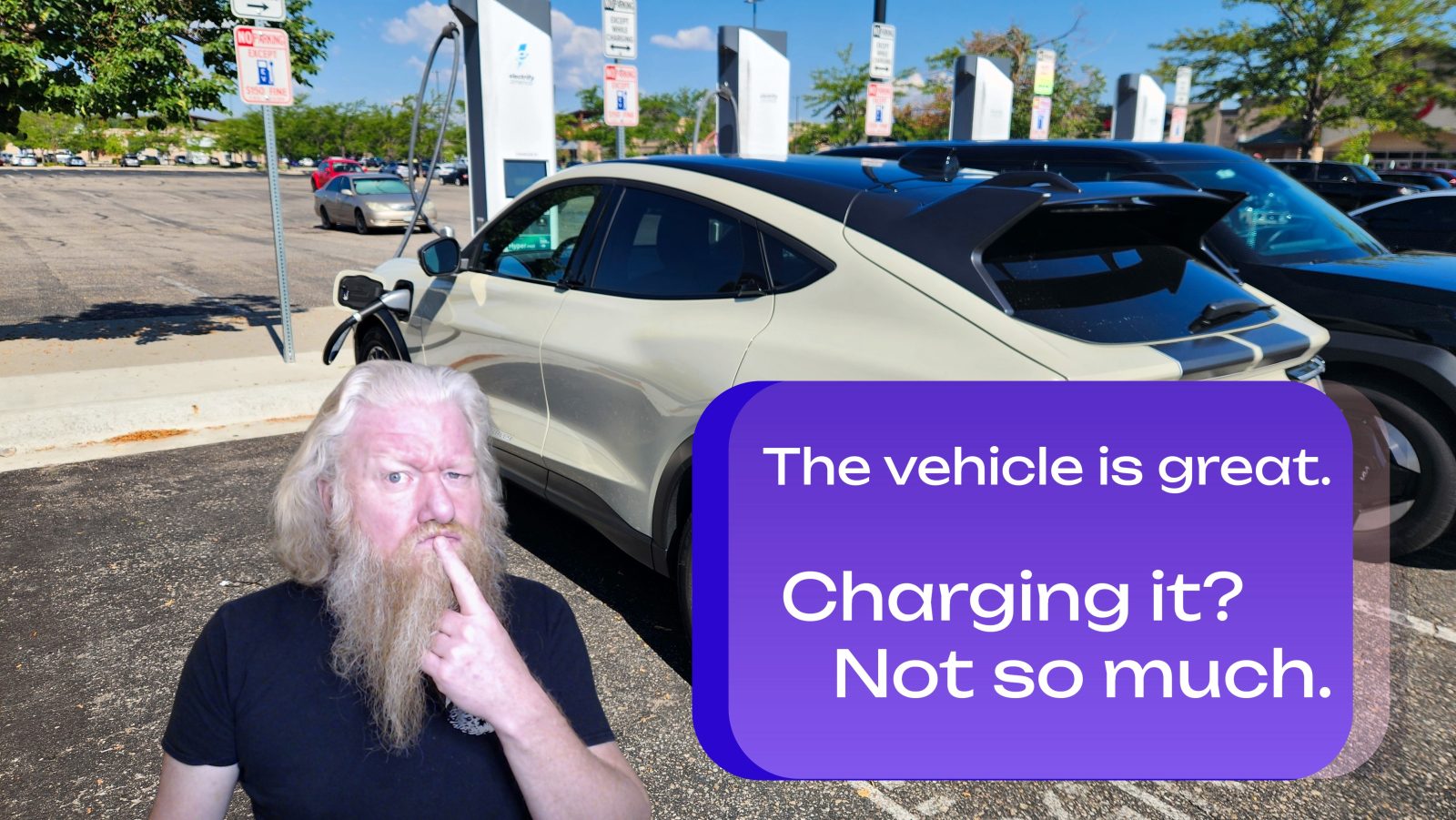
As an automotive journalist, I drive a lot of vehicles. Many of them are electric. I have a 50-amp charging station in my garage because driving EVs is very common for me. I had an electrician install the breaker, line, and plug and have had two different charging setups in there in the years since.
Out in the world, though, I’ve learned that charging away from home is a definite gamble. Sometimes the chargers work, sometimes they’ll connect with your vehicle, and sometimes they’ll not have 20 minutes of app signup and credit card juggling to get a charge out of them. Often one or more of those things makes the EV life miserable. And it’s the primary reason I’d never own an EV as a primary vehicle.
In Cheyenne, Wyoming (where I live) there are three major charging station options: Electrify America, Rivian, and Tesla. The EA stations are hit-and-miss when it comes to whether they work or not, the Rivian stations require a special account to use, and the Tesla stations are Gen2, so they don’t usually work with non-Tesla vehicles. Most of the time, I don’t drive the vehicles I have far enough in one trip to need to charge while on the go. So most of the time I charge at home. Which is what the majority of EV owners would be doing nearly all of the time anyway.
This latest EV, however, included a road trip. We had relatives come into town and I drove them back to the Denver International Airport in a Ford Mustang Mach-E Rally. On paper, this SUV has about 280 miles of charge. But freeway speeds are 75-80 mph here, we have crosswinds (Wyoming, Northern Colorado), and we had a load of adults and luggage in the vehicle. So I knew it would be less than that EPA number. We left Cheyenne with a near-100 percent charge. We arrived at the airport with a 45 percent charge remaining. So we used about half the vehicle’s charge in 100 or so miles of driving.
No big deal. We were in the north Denver area where the number of EV chargers to population is roughly equal to that found in California. Meaning it’s really high. There are hundreds of options between DIA and Cheyenne. So we drove out of Denver on the I-25 freeway northbound, having at that point dropped to about 40 percent charge. By the time we started looking for chargers at an exit, we were down to about 25 percent.
We tried charging at a Charge Point at a Maverick convenience store near Berthoud, Colorado. It kept giving a “not plugged in all the way” kind of error. We tried unplugging and plugging back in several times, same error. Oh well. It was a single charger at a kind of Podunk spot, so we went to the new Buc-ees in Loveland where there is a row of Tesla chargers. We have the converter, it should work.
Nope. The cords are super short and wouldn’t reach the fender on the Mach-E. So not happening.
We then proceeded to the Target about six or seven miles up the road where some Electrify America chargers are located. I’ve used those before and they are usually available and easy. They had several vehicles in place getting charged already, but there were still a couple of cords left. So I pulled in and we finally got a charge. More than half an hour after we’d first exited the freeway to get plugged in. The dashboard said we were at 24 percent in the battery.
Twenty or so minutes later, we were nearing 80 percent and had enough to easily get home with plenty of leeway to spare so there wouldn’t be any pucker factor.
That’s not an uncommon story. Talking to a guy in a Ford Lightning, his work truck, he only charges at that Target location or one other one on the other side of town because he’s also learned that some chargers aren’t worth the gamble. A lady in a Kia EV9 said the same thing about her experience in that area. “When we road trip, we often just take my husband’s truck,” she said. It’s a gas engine.
The charging infrastructure has come a long way, sure, but it’s still got a long ways to go before it’s anywhere near as convenient as a gas stations and pumps.
This article originally appeared on the AaronOnAutos Substack.
