
The Volkswagen Tiguan has always been comfortable, practical, and reasonably attractive. It sold well because it checked boxes. And, until its third generation, it had just a touch of the “vroom-vroom” that made people feel good driving it. Then, in that previous generation, it got larger and.. less vroomy.
The 2026 Tiguan fixes that oversight.
Not completely. This isn’t some lifted GTI replacement. But Volkswagen has finally injected a little personality back into its best-selling SUV. The third-generation Tiguan arrives with sharper styling, a vastly improved interior, more technology, and (most importantly) a powertrain lineup that no longer feels like it was designed by accountants.
And after spending time with it, I came away thinking something I haven’t thought about a Tiguan in a very long time: “I might actually recommend this over a CR-V or RAV4.” That’s a pretty big deal.
It Looks Like a VW Again
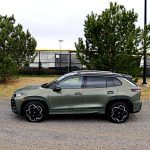
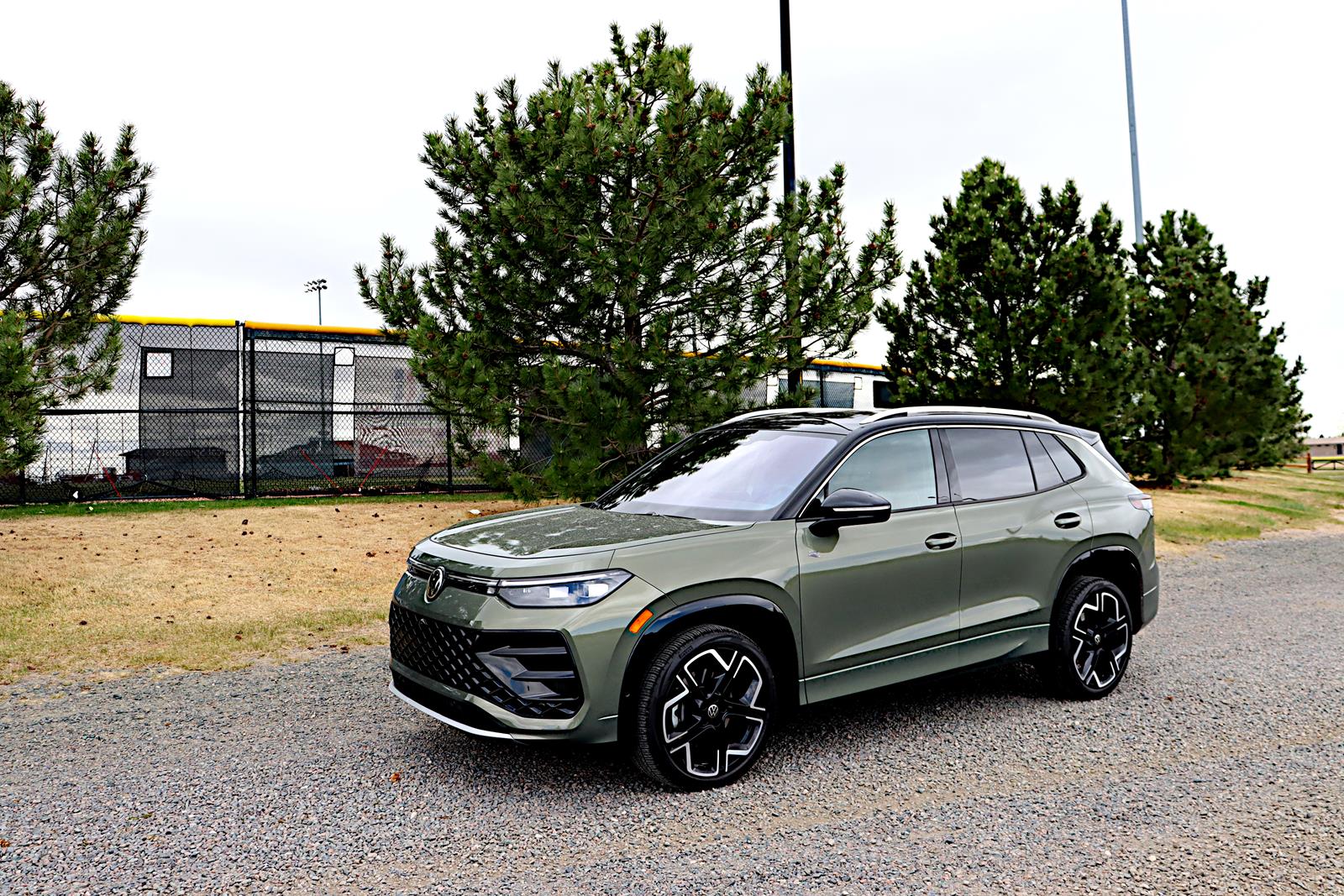
The outgoing Tiguan wasn’t ugly, but it was forgettable. You could park one in a crowded lot and lose it before you finished locking the doors. The 2026 model is far more distinctive.
The front fascia gets slimmer LED lighting, a wider grille treatment, and a more athletic stance. The bodywork is cleaner and more sculpted, while higher trims add illuminated exterior elements and larger wheel options that give the Tiguan some genuine curb appeal. Volkswagen’s designers seem to have rediscovered the concept of visual interest.
It’s still conservative compared to a Hyundai Tucson or Kia Sportage, but that’s part of its charm. The Tiguan doesn’t scream for attention. It simply looks expensive. And in a parking lot full of anonymous crossovers, that’s enough.
The Cabin Is the Real Story
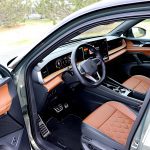
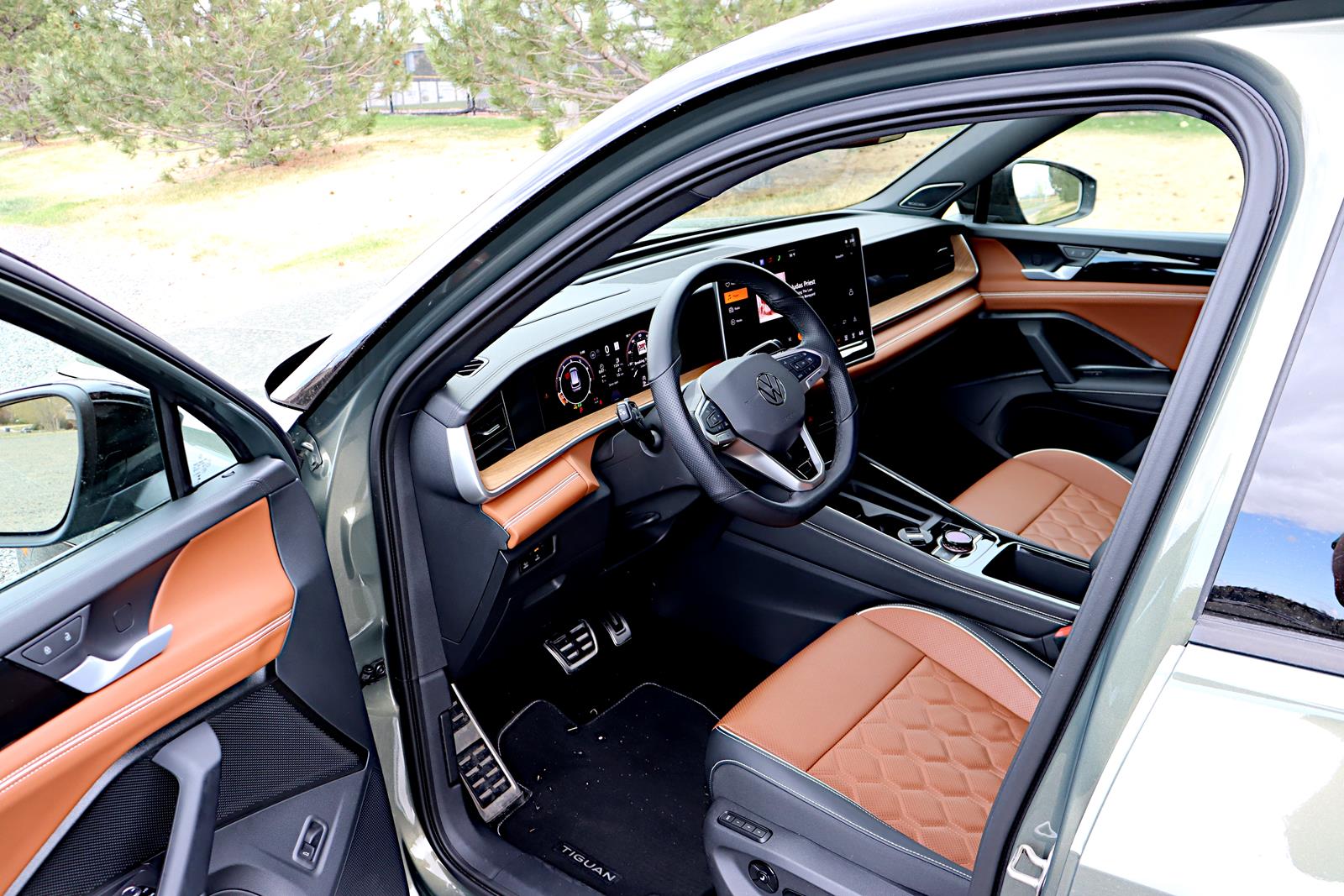
Open the door and you’ll immediately understand where Volkswagen spent its money. The interior is dramatically improved.
Materials are softer. The design feels more premium. The dashboard has a clean, upscale look that borders on Audi territory in upper trims. The center console is larger and more functional, while storage solutions throughout the cabin show that somebody actually spent time using the vehicle before approving the final design.
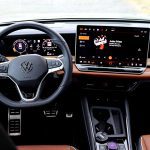
Technology is front and center, of course. A large infotainment display dominates the dashboard, accompanied by a digital instrument cluster and Volkswagen’s latest driver-assistance systems. Wireless smartphone connectivity, adaptive cruise control, a heated steering wheel, parking aids, and a long list of convenience features are available across the lineup.
Not everything is perfect, however. Volkswagen continues its love affair with touch-sensitive controls, and some functions require more screen interaction than they should. Physical buttons remain one of humanity’s greatest inventions, yet automakers continue pretending otherwise. Still, overall usability is much improved.
Goodbye Third Row, Nobody Will Miss You
Volkswagen has officially abandoned the tiny third-row seats that previously distinguished North American Tiguans. And that’s a good thing.
The old third row was a seating area in the same way a hotel room balcony is another bedroom.
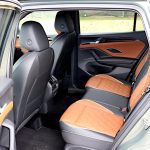
The new Tiguan focuses entirely on being a spacious two-row SUV; and, it’s better for it. Passenger space is generous, cargo room is competitive, and the overall packaging feels more efficient. Rear-seat passengers have plenty of room, and the cargo area is large enough for family-road-trip duty without complaint.
This was the correct decision.
The Standard Engine Gets Better
Most Tiguan models use Volkswagen’s updated EA888 turbocharged 2.0-liter four-cylinder engine, producing 201 horsepower.
That may not sound revolutionary, but it’s a meaningful improvement over the previous generation’s output. More importantly, the power delivery feels stronger in everyday driving situations. Merging onto highways and passing slower traffic no longer requires advanced planning and a favorable tailwind.
The eight-speed automatic transmission is smooth and unobtrusive, which is exactly what buyers in this segment want.
Fuel economy remains competitive, though not class-leading. Hybrid-powered competitors still hold an advantage at the pump, something Volkswagen will eventually address with future hybrid variants already confirmed for the U.S. market.
The New Turbo Model Is the One You Want
For 2026, Volkswagen introduces the SEL R-Line Turbo. This trim upgrades the familiar EA888 engine to 268 horsepower and 258 pound-feet of torque, making it the most powerful Tiguan ever sold in North America. Standard all-wheel drive comes with the package.
Acceleration is genuinely brisk, with 0-60 mph times in the mid-six-second range. That’s not sports-car territory, but it’s enough to make the Tiguan feel engagingly eager.
The chassis has always been one of the Tiguan’s strengths. Volkswagen engineers understand suspension tuning better than most, and the Tiguan continues that tradition. It corners confidently, remains composed over rough pavement, and avoids the floaty behavior that plagues some compact SUVs.
No, it’s not a GTI with a lift kit. But it’s closer than any Tiguan has been in years.
The Short of It
The 2026 Volkswagen Tiguan represents one of the most complete redesigns in the compact SUV segment. It looks better, feels more upscale, drives better, and finally offers a powertrain that can compete with the segment’s best. The interior quality alone puts it near the top of its class, while the new Turbo model adds genuine appeal.
There are still a few first-generation redesign concerns worth monitoring, as some early owners have reported quality-control hiccups and isolated issues. That’s not unusual for a major redesign, but it’s worth noting.
Even so, Volkswagen has delivered something impressive here. For the first time in a long time, the Tiguan isn’t merely a rational choice. It’s a desirable one.