
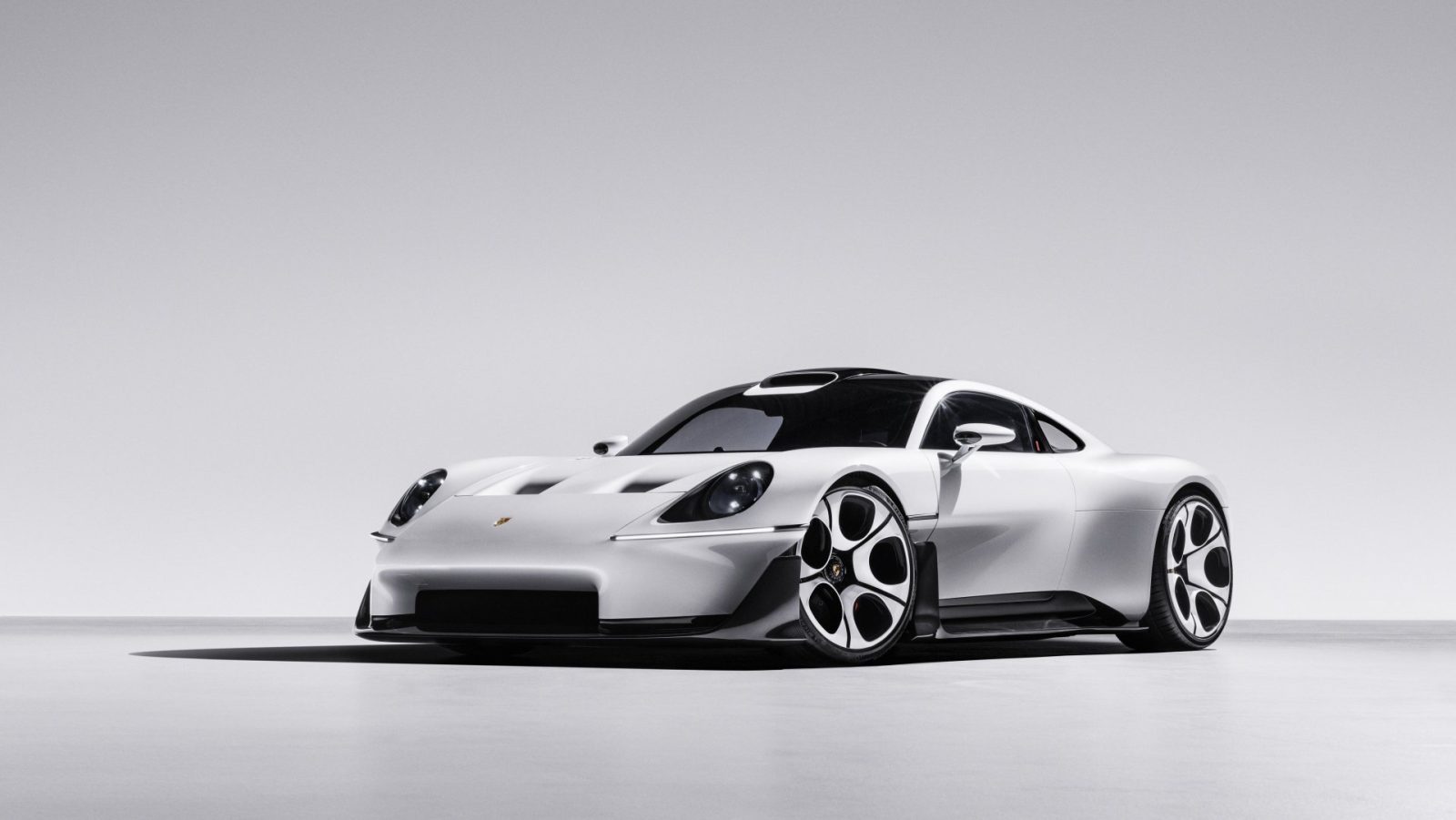
Porsche is looking beyond the iconic 911 with a new vision for the future of its sports cars. The automaker has unveiled the Mission S, a mid-engine super sports car concept that previews the next evolution of Porsche design and signals plans for a new, permanent addition to its performance lineup.
Revealed in New York on October 15, 2026, the Mission S is more than an exercise in futuristic styling. Porsche says the concept represents the foundation for a new mid-engine super sports car platform positioned above the 911. Rather than building another limited-production hypercar for collectors with more money than garage space, the company intends to develop a versatile addition to its customer lineup.
The concept is part of Porsche’s broader Sportwagenschmiede 35 strategic realignment, which aims to shape the brand’s future while maintaining the design identity and driving experience that made it famous.
In other words, Porsche wants to move forward without forgetting what got it here. That sounds straightforward enough until you remember how many automakers have attempted to modernize their sports cars by burying drivers beneath touchscreens and digital gimmicks.
The Mission S suggests Porsche has been paying attention.
A New Supercar With Familiar Porsche DNA
Porsche has built its reputation on evolutionary design. Its sports cars tend to change gradually rather than reinvent themselves every few years, and the Mission S follows that philosophy while introducing a more dramatic mid-engine layout.
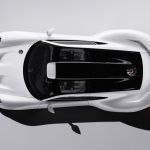
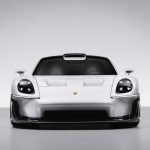
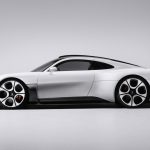
The concept’s proportions immediately distinguish it from the rear-engine 911. Its broad stance, low front end, pronounced fenders, and flowing roofline create a silhouette that emphasizes both performance and mechanical purpose.
Porsche calls its approach authentic, consistent, and timeless. The exterior combines recognizable design elements from the company’s history with contemporary aerodynamic and structural features.
The round headlights and prominent front fenders recall the 911, while details in the bodywork reference the G-series 911 produced between 1974 and 1989. The low front end draws inspiration from the Porsche 911 GT1, and the roofline takes cues from the legendary 959.
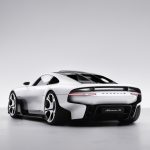
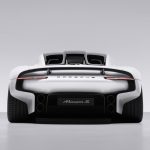
The rear incorporates a design concept inspired by the 911 GT1, bringing together the car’s bodywork and rear structure in a distinctive arrangement.
Porsche also borrowed inspiration from its motorsport history for the cooling system, whose design recalls the radiator fan arrangement of the Porsche 917.
Even the wheels have a historical connection. Their design takes inspiration from the distinctive dial-style wheels of the Porsche 928, reinterpreted with an emphasis on reducing weight.
The result is a concept that looks forward without pretending Porsche’s past never happened.
That’s an important distinction for a company whose customers tend to have strong opinions about what a Porsche should look like. A new design can be adventurous, but making it unrecognizable would be roughly equivalent to removing the steering wheel from a sports car and calling it progress.
Mid-Engine Architecture Signals Bigger Ambitions
The Mission S’s most significant feature isn’t a particular styling detail. It’s the platform underneath.
Porsche describes the concept as a mid-engine super sports car, placing it in a different architectural category from the familiar 911. The central engine position helps define the car’s proportions and contributes to the distinctive roofline and rear bodywork.
Porsche has not yet disclosed production powertrain specifications, performance figures, or a detailed launch schedule. The company also has not announced whether the eventual production vehicle will use a conventional combustion engine, a hybrid system, or another powertrain configuration.
For now, the Mission S is a design and engineering vision rather than a production-ready specification sheet.
However, Porsche’s stated intention to establish a permanent super sports car offering above the 911 makes the concept particularly interesting. The company isn’t simply teasing a one-off show car intended to collect applause at an auto show before disappearing into a corporate storage facility.
Instead, the Mission S previews a broader product strategy that could give Porsche another flagship performance model.
The distinction matters. A limited-production hypercar demonstrates what an automaker can accomplish when cost and practicality become secondary considerations. A permanent model must also make sense as a product that customers can order, own, maintain, and drive regularly.
Porsche says the new platform will draw on decades of motorsport experience, advanced engineering, and technology developed around the brand’s performance heritage.
How those ambitions translate into a production vehicle remains to be seen.
An Interior That Puts the Driver First
Inside, Porsche takes an approach that may surprise anyone who assumes the future of automotive technology requires covering every available surface with a screen.
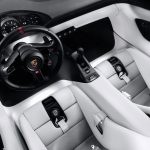
The Mission S emphasizes physical controls, clear instrumentation, and a cockpit designed around the driver.
Its interior architecture draws inspiration from historic Porsche models, including the 550 Spyder and 356. Two defining lines extend across the dashboard and doors, creating a visual connection with the exterior while reinforcing the sensation of sitting low within the car.
The cabin combines traditional switches and buttons with digital displays, aiming to preserve the tactile experience of operating a performance vehicle while retaining the flexibility of modern electronics.
Porsche calls this a symbiosis of analogue and digital controls.
That description might sound like marketing language, but the details suggest a deliberate effort to avoid the screen-heavy approach increasingly common throughout the industry.
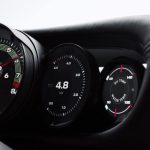
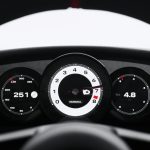
The instrument cluster, for example, features five distinctive circular elements behind the steering wheel. At its center sits a tachometer with an analogue needle and a digital display positioned behind it.
Depending on the selected driving mode, the instruments can rearrange themselves, with the circular elements positioned side by side or behind one another. The tachometer can also move closer to the driver to emphasize the driving experience.
Porsche has reimagined the Sport Chrono element using a similar combination of traditional character and digital functionality.
The car’s key holder remains to the left of the steering wheel, following a familiar Porsche convention. New push-pull controls on the dashboard provide direct access to selected comfort and driving functions.
These details reinforce the idea that technology should support the act of driving rather than compete with it for the driver’s attention.
No Permanently Installed Center Screen
Perhaps the most unusual interior decision is what Porsche chose to leave out.
The Mission S does not have a permanently integrated central infotainment display or a dedicated passenger screen.
Instead, Porsche has designed a retractable smartphone holder compatible with Apple’s MagSafe technology. Drivers can use their phones for navigation and information when needed without making a large display a permanent fixture in the dashboard.
The My Porsche app provides access to vehicle functions and allows users to select digitally rendered instrument designs inspired by historic Porsche models.
It’s an interesting compromise between modern connectivity and a more focused cockpit.
Automotive interiors have increasingly become exercises in screen management. Manufacturers compete to install larger displays, add more menus, and move more vehicle functions into digital interfaces. The result can be impressive in a showroom but less appealing when a driver simply wants to adjust a setting without navigating a small electronic bureaucracy.
Porsche’s concept takes the opposite approach: retain digital flexibility while keeping essential interactions straightforward.
Whether this philosophy survives unchanged into a production vehicle is another question. Customers have come to expect extensive connectivity and infotainment capabilities, and production regulations and packaging requirements can complicate the transition from concept to reality.
Still, the Mission S offers a compelling alternative to the idea that every new sports car needs another screen.
A Nod to Porsche’s American History
Porsche chose an unusual but historically significant location for the Mission S’s world premiere: a pier in Queens, New York, overlooking the Manhattan skyline.
The location connects the concept with the Porsche 550 Spyder, the mid-engine sports car whose early photographs were taken at the same pier in 1953.
The 550 Spyder helped establish Porsche’s identity as a manufacturer of serious performance cars, and its competition heritage contributed to the company’s growing reputation in the United States.
By returning to that location, Porsche draws a direct line between its early American ambitions and its plans for the next generation of sports cars.
The connection is particularly appropriate for a concept that combines a mid-engine layout with a design influenced by the company’s racing history.
The Mission S isn’t intended to replicate the 550 Spyder. Instead, it borrows the idea that a Porsche sports car should have a clear purpose, distinctive proportions, and an unmistakable connection to the company’s heritage.
What Comes Next for the Mission S?
Porsche has made its intentions clear: the Mission S previews the design direction of future models and the development of a new mid-engine super sports car platform positioned above the 911.
What remains unclear is how quickly the concept will translate into a production vehicle and what form that vehicle will take.
Porsche has not yet provided final powertrain details, pricing, performance specifications, or a confirmed production timeline. Those omissions mean the Mission S should be viewed as a strategic preview rather than a vehicle customers can begin configuring at their local dealership.
Nevertheless, the announcement offers a meaningful glimpse into Porsche’s future.
The company is pursuing a new flagship sports car while emphasizing recognizable design, a driver-focused interior, and a blend of traditional controls with modern technology.
If the production version retains those priorities, Porsche could deliver something increasingly uncommon in the modern performance-car market: a new supercar that treats driving as its primary purpose rather than one feature among many.
For now, the Mission S is a promise rather than a finished product. But it’s a promising one, particularly for enthusiasts who believe the future of performance cars should involve more than bigger screens, increasingly complicated interfaces, and a growing collection of electronic driving aids.
Porsche appears determined to preserve the connection between driver and machine as it develops its next generation of sports cars.
And if the Mission S is an indication of what’s coming, the 911 may soon have a bigger sibling with ambitions of its own.